BTS Week 12: Finals

We did it!!!!

For the last 12 weeks, we’ve worked our way through our homes and spaces with the goal of heading into the holiday season with more calm, noticing what works, subtracting what doesn’t, and adding tiny habits that make our lives feel gentler. No perfect-home goals here. Just small steps toward calmer spaces and truer reflections of who we are.

As we move into a season that can feel loud and fast, I hope you are heading into it with a little more space to breathe.

So…how are you doing?

I’ll go first: I was doing okay. I was doing the things. Not all the things, not all the time. But I was doing the things.  And then I decided to add one more thing.

Then another.

Then another. 

and before I knew it I had like 57 big giant things on my calendar over the next month. Why do I do this???

It’s easy to feel like a failure and let things slip. But last night I had a bit of a revelation.

Yesterday I saw a contractor my husband had scheduled arrive on our security camera and felt a spike of panic. I didn’t know they were coming. I hadn’t “gotten the house ready.”

Then I realized: the house was fine.

They could walk in and get to what they needed. Yes, a few things had to be moved where they were working, but there was space to move them. There wasn’t an avalanche of shoes at the front door. 

Even in this very busy season, I can feel the difference. I may be exhausted heading to bed, but my clothes are (usually) set out and tomorrow’s coffee is pre-measured. Less last-minute scramble. Less searching. 

Over the last three months we’ve tackled making our beds, setting out our clothes, simplifying mornings, doing the dishes, streamlining pantries, smoothing our entrances and exits, and making space for creativity.

We’re ready for finals.


The Final Exam

For our final exam, we have two images to compare/contrast and two questions to think about. That’s it. Oh, and it’s an open book exam – feel free to look back at any of our notes from this past semester. 

Image One:

(Where’s Waldo crowd scene)

Remember these books? “Where’s Waldo” has entertained thousands simply by hiding one striped character in a chaos of distractions.

Before you get too distracted trying to find Waldo, let’s move on to image two:

Image Two:
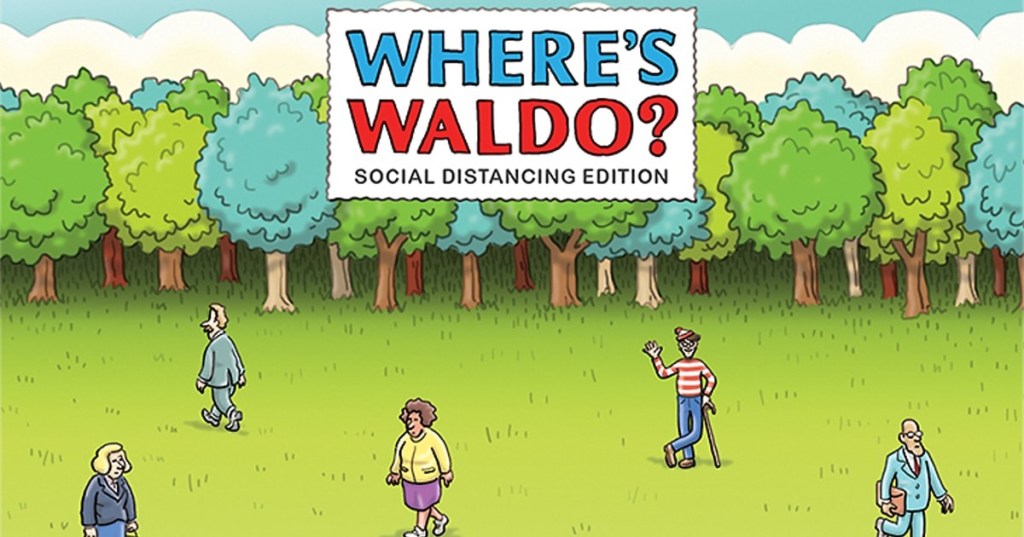
(Social distancing Waldo cartoon by Clay Bennett for the Chattanooga Times Free Press)

Now for our questions:
Which Waldo was easier to find?
What made it easier?

Here’s what I’m learning:

So often in life we create that first, harder version for ourselves, because we think the solution to not being able to find something is to add more. We want to find “Waldo” but end up burying him in a crowd.

Some examples that may or may not be personal testimonies:

  • I can’t find matching socks. So I buy a dozen more pairs of socks so I never lose a matched pair of socks again. Then the next time I need a pair of socks, I have to dig through a sock drawer version of “Where’s Waldo” looking for what I want.
  • My kids can’t find a snack they like in the pantry. So I buy 3 kinds of bars, 4 boxes of fruit strips and a Costco variety box of snacks. Now my kids have to swim through a life size Where’s Waldo page to find anything and the fruit expires before they can eat it all.
  • “I want more rest, more creativity, more joy.” So I buy the latest gadgets, tools, and systems promising to make my life easier. Instead, they add to the sea of tiny red-and-white imposters crowding out Waldo.

Adding more didn’t help me find anything. It just made more places to lose stuff.

The key to finding Waldo was never in just adding more.

It’s in less.

Like the socially distanced cartoon of Waldo above, when we simplify and remove the excess, what we are looking for is so much easier to find. 

Rest and creativity aren’t found by piling on more.

They show up when we remove the distractions and create space for them.  

That’s what these last twelve weeks together have been about: bedrooms and pantries, doorways and nightly resets, minimizing and giving tiny gifts to your future self:

Simplify, subtract, create space…and what matters slowly becomes easier to find.

Peace, calm, and joy don’t arrive because we do or buy more.
They show up when we make room.

This is the work  –  and the gift we’ve been giving ourselves for twelve weeks.

Let’s keep going.

BTS Week 11 Creativity (minus clutter)

As the days get shorter and the dark gets deeper, it’s all the more important to care for our bodies, our minds, and our souls, and one of the most powerful ways we care for our souls is to create.

Creating gives us space to process our world and ourselves.

“Practice any art, music, singing, dancing, acting, drawing, painting, sculpting, poetry, fiction, essays, reportage, no matter how well or badly, not to get money and fame, but to experience becoming, to find out what’s inside you, to make your soul grow.”

— Kurt Vonnegut

Creating reminds us of meaning, assigns meaning and helps us express meaning.

Creating leaves space for the unsolved, the wonder, the mystery.

This week we are creating space for creativity.

Take a moment and think about what you create. 

Don’t think you are creative?

There are countless ways we create.

Some are more obvious, creating items we can see and touch.: Painters, sculptors, paper artists, repurposers, woodworkers.

Some people create experiences that exist for a moment (or sometimes captured for longer): Singers, dancers, musicians, speakers.

And there are hundreds of other ways we create:

Creating a meal for ourselves/our families

Creating a safe space for conversations with a friend

Creating solutions for problems

Each of those creations need space – mentally, emotionally, and often spatially –  for creation to take place.

This week we are creating room for our art.

This will look a little different for everyone.

Perhaps creating space looks like adding an “create” block to your calendar and telling yourself and others, “I am booked from 9-11 on Saturday.”

Or maybe it means gathering your supplies in one place. You may not have a designated writing desk or craft table, but could you collect your essentials in one basket/drawer/tote?

To make space to create (like most things in life), we need to make choices. We have to acknowledge we can’t do everything at once.

I LOVE making crocheted pumpkins in fall. I keep a basket of yarn, needles, and stuffing by the couch so I can have everything I need to make  pumpkins from start to finish as I sit and stare out the window.

I’m planning a gallery show in a few weeks, showcasing some of my repurposed and upcycled art. In order to prepare for that show, I had to take some time this week to say goodbye to pumpkin season. My tools, stuffing, yarn, etc got packed back up into their suitcase in the basement, contained and tucked away for next season. Now the basket by the couch can be reassigned for my repurposed art in progress. As I switched out my projects for the season, I also came across a few supplies for a project I would LOVE to learn or or get better at. But I know I do not have the capacity in this season, and so keeping them just means they whisper to me every time I walk by them, like a non-stop audible to-do list; and they make it harder for me to clear things out of the way to create the art I’m able to do in this season. 

As you think about your space to create, take a moment to acknowledge – We can’t do ALL the things. What is your creative focus in THIS season? Not “what did I have time for before I had this job/kids, etc”, not “what do I want to do when I ‘have a little more time?’”

What one thing can you make space to focus on now?

Let’s get creative with our weekly homework assignments:

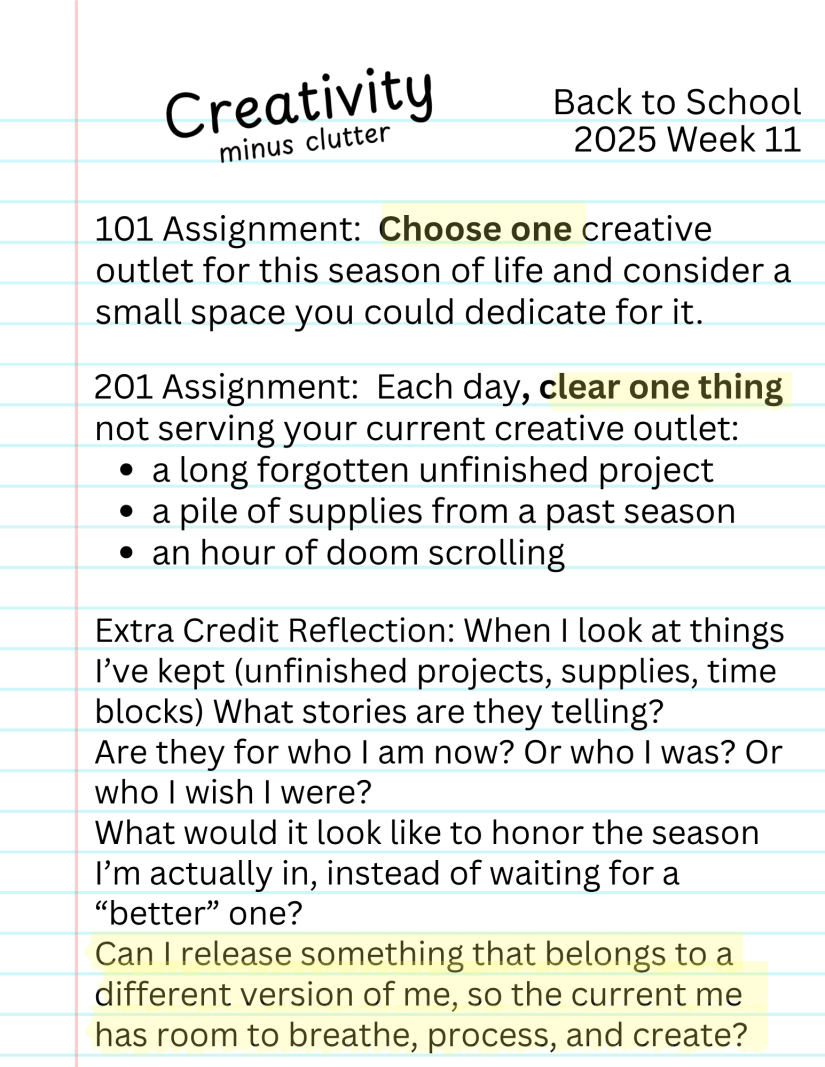
101: Choose your one thing for this season of your life. Is it writing? Dancing? Stop motion videos of felted from and toad doing gentle homemaking tasks? (man, I miss seeing that Instagram account. Does it still exist?) 

Once you’ve chosen your “thing,” dedicate space for it:

  • A table near an outlet for your laptop and notebook.
  • A few hours on your calendar to focus on your craft.
  • A basket by the couch for wool and a felting needle to make your frog a tiny hat.

201: Each day, clear away something that doesn’t serve your current creative outlet:

  • An unfinished project that whispers shame every time you move it.
  • A pile of materials that belong to a past season.
  • An hour of doomscrolling that doesn’t actually calm your spirit.

Extra Credit Reflection:  When I look at things I’ve kept (unfinished projects, bins of materials, bookmarked ideas, calendar appointments)  What stories are they telling?
Are the supplies and ideas for who I am now? Or who I was? Or who I wish I were? What would it look like to honor the season I’m actually in, instead of waiting for a “better” one?
Can I release something that belongs to a different version of me, so the current me has room to breathe, process, and create?

Weekly "Homework" typed on notebook style paper

Week 10: Thresholds and Doorways – Part Two (Addition)

Welcome to week 10, where we’re doing the hokey pokey, turning ourselves around, and heading back out the door.

Last week we talked about thresholds and the “doorway effect” – how walking through a doorway sends a signal to our brains to leave behind what’s on the other side. This often means forgetting why we walked into a room, buuuut, we can also use that effect to our advantage, letting go of the stress of the workday, the grocery store, or the commute and leaving it on the other side of the door.

When our entryways are piled with shoes, bags, and a box of cement (just me?), that transition can feel more like a continuation of traffic jam stress than a clean slate.

Last week’s focus was subtraction – clearing out a little clutter each day and noticing how people in your household move through the entryway space.

This week, we’re shifting to addition.


What do we take with us when we leave home?

Sometimes it’s stress – a frantic search for missing keys or that feeling of already being behind.
This week I want to take some small steps to make it something better: the calm of knowing where things are, small confidences of feeling prepared.

I love thinking of that prepared feeling as giving myself a little gift for the future.
When I put my keys in their designated home, it’s a tiny gift to future me.
And the next morning, I get to unwrap that gift – walking out the door just a little more calm, a little more ready.

I love that feeling.
And I want to take more of it with me as I step out each day.


This week: addition through intention

Let’s talk about what we can add this week to give ourselves that confident, prepared feeling as we leave our homes.

When I observed our entryway last week, I noticed that shoes are our main culprit. They’re almost always scattered around, in the way. Since the front door is literally in my dining room, it means that clutter is not just clogging up the entrance to our home,  it’s an uninvited guest at mealtimes and throughout the day, too. My instinct was to fix it immediately. But I know when I jump to solving as soon as I see a problem, it usually involves a “click, add to cart” solution. I want to slow down this week, and see what I can rearrange thoughtfully, with what we already have, instead of rushing to what Amazon tells me will solve all my problems.

Addition doesn’t have to mean more stuff.
It can mean adding thoughtfulness, intention, or a sense of peace to a space.


This week’s assignments:

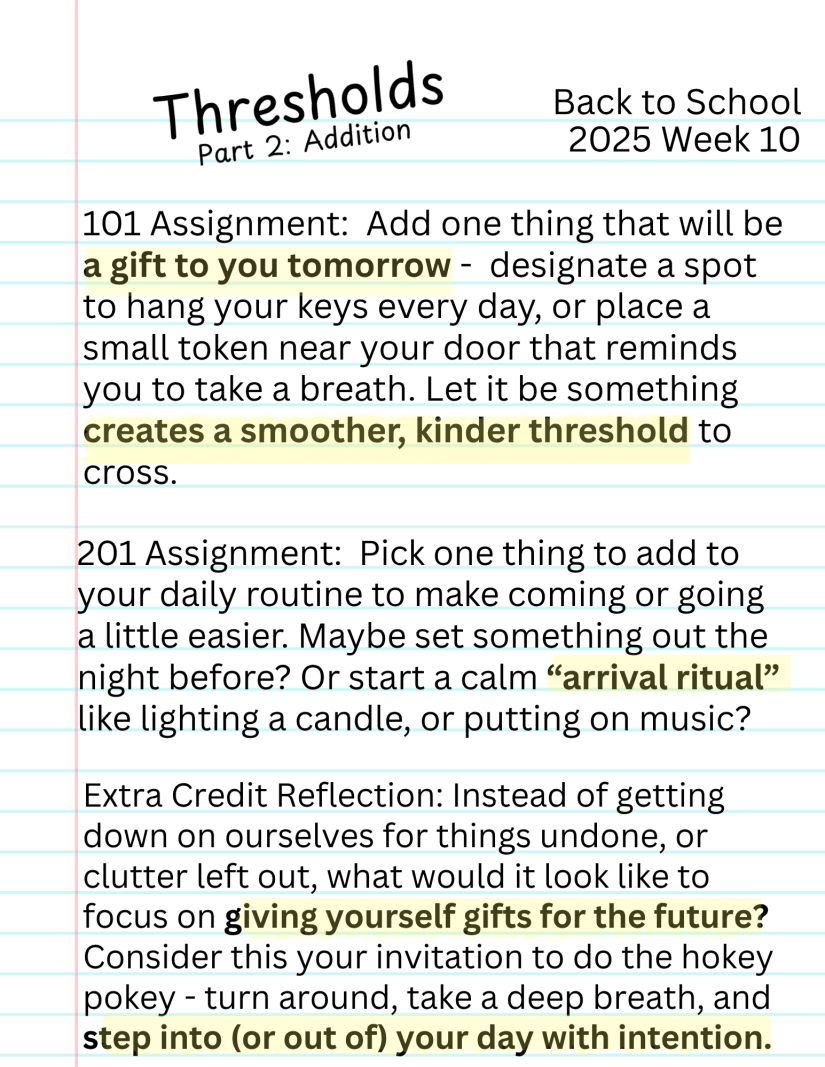
101: Add one thing that will be a gift to you tomorrow.

  • Designate a spot to hang your keys and practice hanging them there every day.
  • Place a small token, like a photo, or post-it note near your door that reminds you to take a breath and embrace peace, presence, courage, or patience.
  • Maybe it’s simply adjusting something small so your space works better for you. Can you add a basket just for mail, with a recycling bin right below it, so as you bring the mail in the door you can immediately trash the junk? Or add the habit of walking over to an existing garbage/recycling bin with your mail as you walk in the door?

Whatever it is, let it be something that makes leaving your home, and arriving back, feel like a smoother, kinder threshold to cross.

201: Pick one thing to add to your daily routine to make your going out and coming home a little easier. Can you set something out the night before? Or create a small ritual for arrival, like turning on a lamp, lighting a candle, or putting on music?

Reflection:

Instead of getting down on ourselves for things undone, or clutter left out, what would it look like to give yourself gifts for the future? Getting my lunch ready to go the night before is one less thing off the mental to do list playing on repeat in my brain when I try to go to sleep, and having it ready to go each morning means I’m not just feeling more prepared, I’m also more likely to eat a little healthier than grabbing a bar on the way out the door. Which helps create an upward spiral through my day.

Consider this your invitation to do the hokey pokey – turn around, take a deep breath, and step into (or out of) your day with intention.

This week's assignment pad

Week 9: Thresholds & Doorways (Part 1: Subtraction)

We are stepping into week 9 – literally!! This week we’re crossing thresholds and doorways, entering and exiting our homes.

If you’ve ever walked into a room and immediately forgotten why you went there, you’ve experienced what researchers call the doorway effect. Crossing a threshold sends a signal to our brains that we’re entering a new space, and it often causes us to “drop” what we were just thinking about.

In my day job, I often work with people who have memory deficits, and the doorway effect can be frustrating – compounding existing memory problems, but in our houses, the doorway effect can actually be a gift.

Every time we walk through the doorway to our home, we have a chance to reset. It’s a chance to decide what we leave behind and what we carry forward.

When you walk through your front door, what comes with you?
The mental list from work? The grocery store chaos? The stress of your commute?

An entryway cluttered with shoes, bags, mail, and everything piled in a tangle can continue the “traffic jam” feeling. We walk through the doorway and stay stuck in the outside mindset, instead of shifting into the calm of home.

What if your entryway became a true threshold?
A gentle cue to your brain and body: You’re here. You’re home. You can exhale now.

And just as importantly: what if your doorway also worked in the other direction?

What if, as you step out each morning, you carried with you something from home: a sense of peace, preparedness, or calm that travels with you through the day?

This week we’ll look at how we come in to our homes, and what we may need to subtract to find more space for calm as we enter our spaces. Next week we’ll consider how we can carry that peace with us as we leave.

Time for our homework assignments!: Choose what level(s) you’d like to try out and spend some time with it each day this week:


101: Simply Observe

Spend this week paying attention to how you (and others in your household) actually move through your entryway.

Ask yourself:

  • How do we transition into this space?
  • Is there a home for the things we consistently bring in? (think: shoes, bookbags, grocery bags, keys, sunglasses, etc)
  • What has a permanent, functional resting spot?
  • Are we using it consistently?

Our house is open concept. From the second you walk in the front door, you can see most of our main living space. We’ve created a few systems that do work for us:

  • A drawer to drop our keys, so we always know where they are.
  • A simple over-the-door hanging system I dubbed Lunchbox Lane, where our lunchbags go after they’re emptied.

And then there are the systems with good intentions but inconsistent follow-through, like the bin for mail that sometimes gets sorted, sometimes gets ignored, and sometimes just becomes a mountain of circulars and junk.

And finally, a few systems that might as well not exist. Like the shoe trays at the front door that, in theory, keep things tidy…but in reality look like someone dropped a box of shoes from the ceiling and walked away.

This week, notice where you and your family naturally move, drop, and pause when coming home.


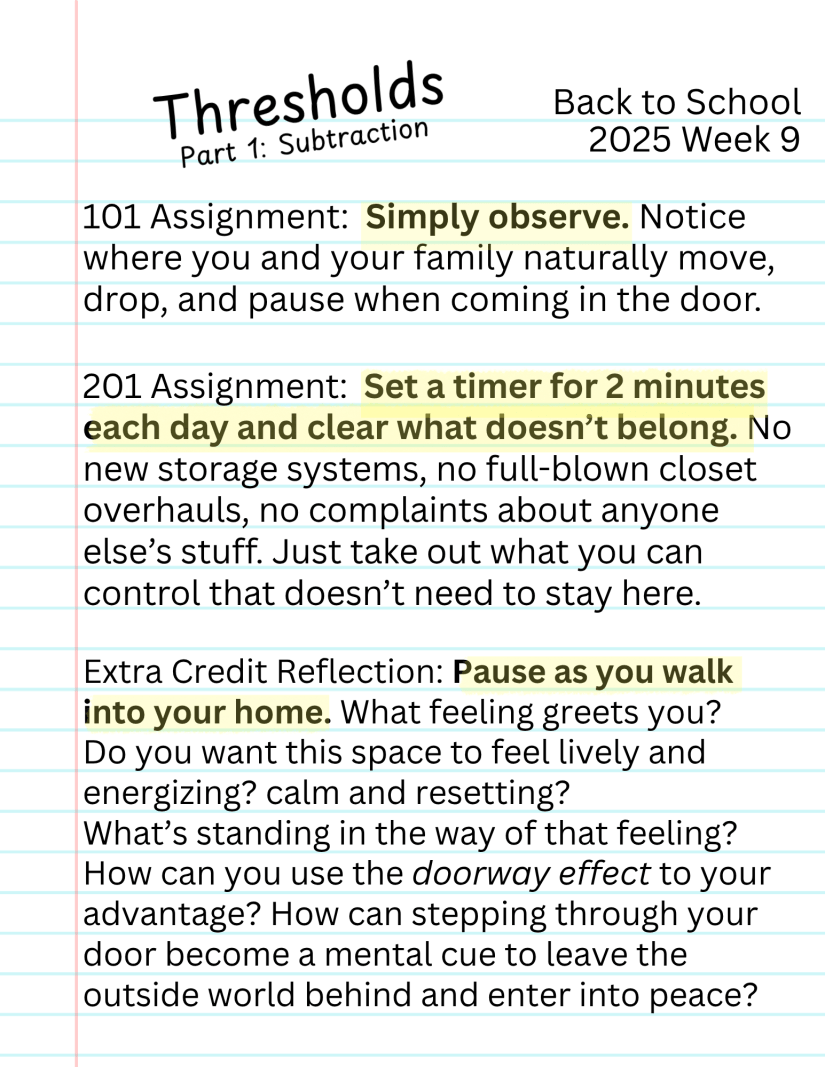
102: Two-minute clutter rescue.

Set a timer for two minutes each day and clear what doesn’t belong.
No new storage systems, no full-blown coat closet overhaul, no complaints about anyone else’s stuff.

Just take out what you can control that doesn’t need to live in this space.
The goal is to work towards a small, daily exhale – a clear threshold to step into.


Reflection: What do you want to feel when you enter your home?

Pause for a moment as you walk through your door this week. What feeling greets you?
Do you want this space to feel lively and energizing? calm and resetting?

What’s standing in the way of that feeling?
And how can you use the doorway effect to your advantage? How can letting the act of stepping through your door become a mental cue to leave the outside world behind and enter into peace?

Let this week be about subtraction: noticing, removing, releasing.
Next week, we’ll explore the addition side of thresholds: how to add small cues and touches that help us transition with intention and bring more peace into and out of our homes.


This Week's assignment sheet

Summer Assignment

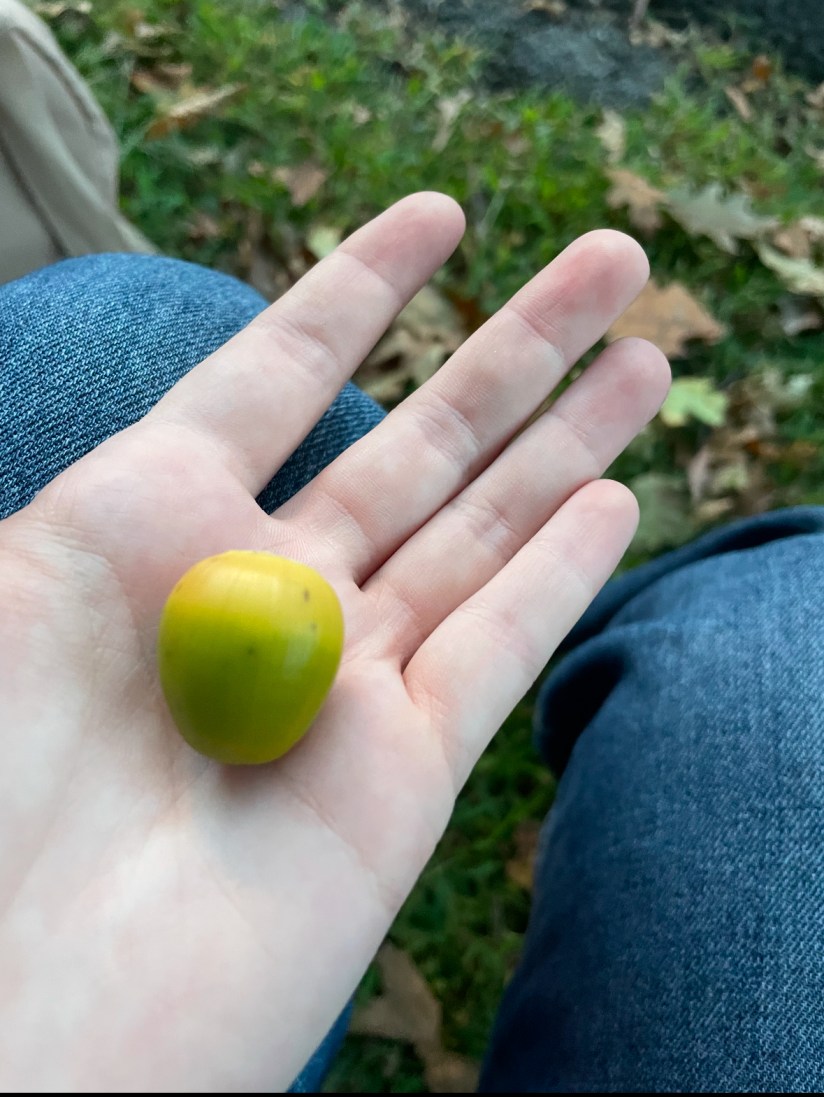
Before my daughter heads off to school each morning, I remind her to “send me a photo of something that makes you smile today.” It might be something as seemingly small as a green acorn on the side of the road, but asking for that little photo helps put her in a mindset to be on the lookout for joy.

Because when we’re on the lookout for joy, we can usually find it. 

Of course, the opposite is true, too. When we’re on the lookout for frustration, comparison, perceived affronts, or anger, we are REALLY good at finding those too. Our brains love a well-worn path and following the direction we’ve told it to go, so whatever we are used to looking for we are certain to find. 

If you haven’t searched for joy before (or in a long time) it can feel like trying to flex a muscle you haven’t used in a long time. You may wonder if you still have it, or if you left it back in high school gym class. It can almost feel like trudging through an overgrown field. If you haven’t searched for joy before, your brain might be confused; this is not the path it is used to traveling.

Like a trailblazer, when we search for joy for the first time in a long time, we have to leave the familiar pathways and clear out the brush and stickers. But the more we direct our brains to travel that path, the more our brains say, “oh, I remember this way! I know what to do” and it will help us find our way to joy.

As we prepare for our Fall Semester (beginning next week),  I’m giving you and I a little “End of Summer Assignment.” No book reports or citation formatting required, just one simple task:

Take a picture of something in your home that makes you smile. Every day.

a hand holding a small green acorn.

Take a Hint

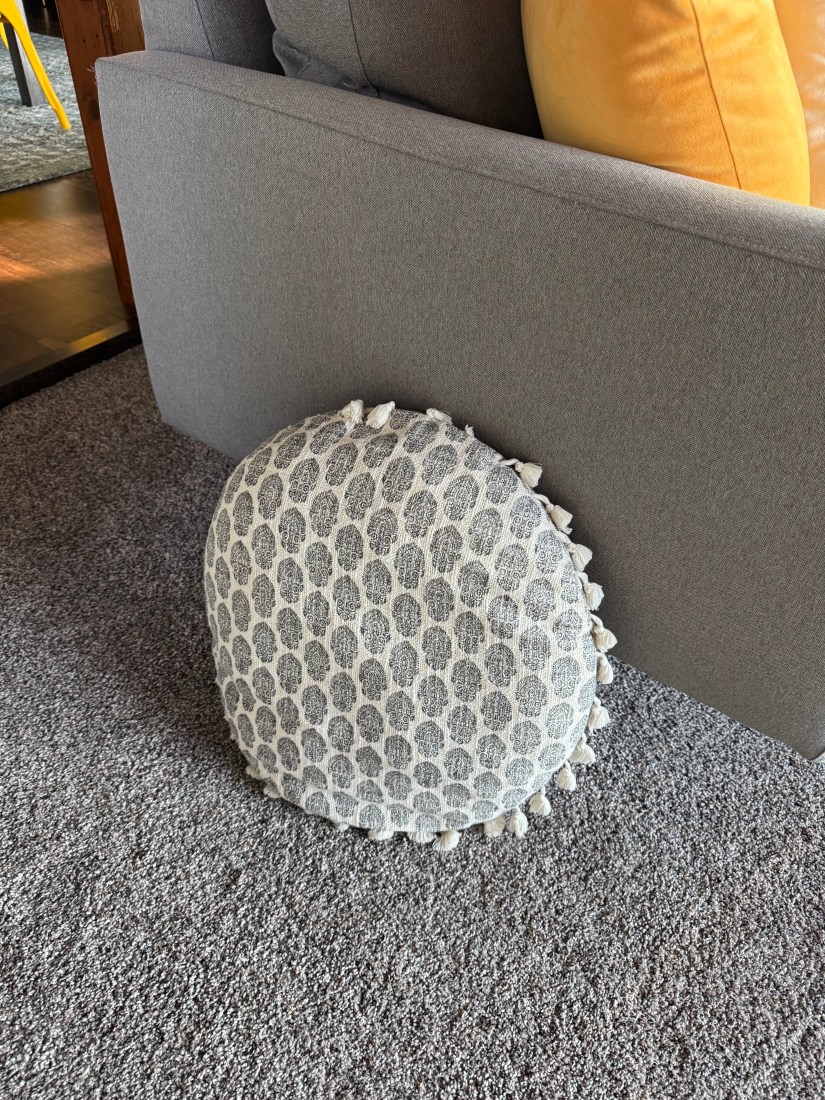
When we sit down on the couch, my partner and I both move a pillow.
Without thinking, at least one ends up on the floor every day. Then, when we get up, we have to remember to put it back.

What if instead of treating this like another micro task on our mental to do list,
I see it as a little hint:

Like the couch is quietly whispering: “You really don’t need four pillows.”
(Even if they are really cute.)

Maybe this doesn’t need a big evaluation or thought process.
Maybe the pillows that keep ending up on the floor are the ones we never choose. And maybe, instead of putting them back on the couch again, I could pick them up, put them in the donate bin, and never have to pick them up off the floor again.

What other simple clues are scattered around our homes, just waiting for us to notice?

The Joy in What Stays

Uncovering real isn’t a blog about decluttering. I mean, I do a lot of decluttering work here. But the point isn’t decluttering. The point is uncovering what’s real and living life well. 

Sometimes what I get rid of  allows me to live more simply – like the weekend I wrote about a couple weeks ago, where we were able to enjoy hosting a family gathering AND engage in relaxing activities before, because we chose to simplify our processes, our expectations, and the amount of stuff we had to manage.

And sometimes uncovering real is about celebrating what stays.

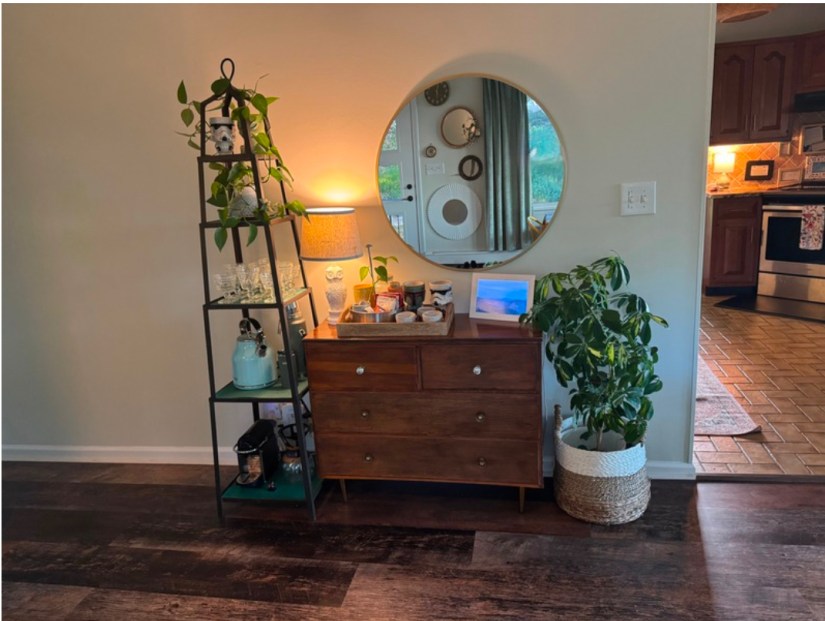
This little vignette is one of the first things we see when we walk in our front door.  

A little vignette made up of a vintage dresser, mirror, and etagere.

Sometimes it gets extra crowded with random sunglasses, receipts and other things that got put down instead of put away. But most of the time it’s contained, and I love all the little elements that make up this scene.

I have always tucked dressers anywhere I can find a place to fit them. This one was a $5 find at a garage sale I drove by many years ago. I cleaned it up and replaced a couple knobs and legs. (The new legs got a little damaged in our last move, but it seems to hold its weight fine so I’m not touching it)

The étagère was a roadside treasure that just needed a good cleaning before joining the vignette to add a little height and storage, and the planter bursting with pothos is half of an old lamp I pulled out of my sister’s garage when she was sorting through what the old owners had left behind, paired with a gold tray “saucer.” 

A small hot cocoa station for the kiddos is contained in a “silver tray” (aka: a repurposed filter basket I salvaged from a broken coffee urn. One of those giant ones churches always had at their Sunday morning coffee hours in my childhood. 

I love the mixes:

Modern and Vintage: the modern electronic photo album that occasionally features little videos from our wedding day and big round mirror (the only things purchased new for this space), with the thrift store score of the parfait glasses like the ones we ate pudding out of in my childhood. 

The highly functional (keys and office supplies storage tucked into the top drawers) with the goofy –  Star Wars themed cocoa mugs for each of our kiddos, a coffee drinking Lego figure, and a cracked owl lamp who is still sporting the mustache sticker my daughter decided he needed many years ago. 

Like many of my spaces, it still has lots of stuff. (Have I mentioned I’m not a minimalist yet today?) but keeping it maintained – dealing with the receipts that pile up in the key drawer,  culling our coffee supplies – means I get greeted with a display that makes me smile every time I come home. 

It’s functional AND pretty, layered with stories, memories and joyful pieces, and exactly what I want to come home to.

The.Best.Storage

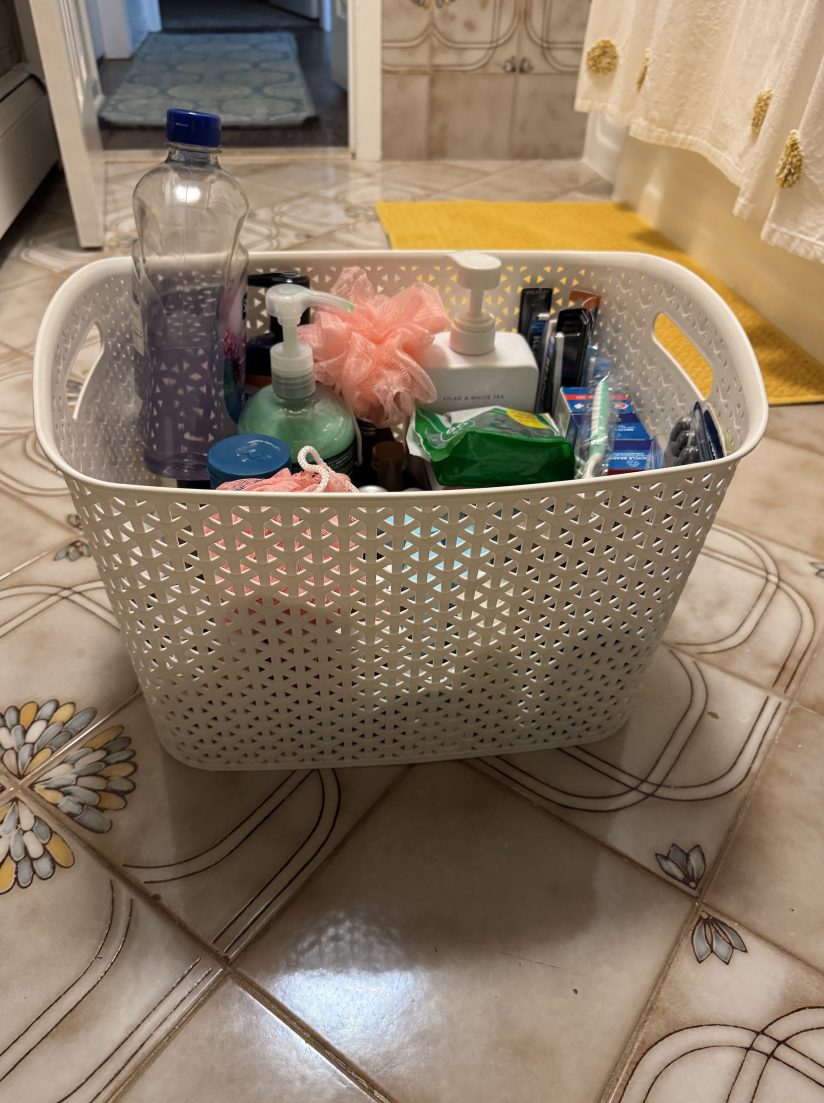
Plastic Bin filled with health and beauty "back stock"

I keep a giant basket under the bathroom sink that holds our health and beauty “back stock”: toothpaste purchased on a “must buy three” sale, shave gel from a company you can only order from online (so might as well order enough to get free shipping)… you know all the deals.

I’m a sucker for a good deal. I used to be an avid couponer too, especially back when I was going through about a thousand diapers a week. I love watching the discounted price get calculated at the register like I imagine a gambler loves the feeling of beating the house.

And it’s not just the thrill of the win. I like feeling prepared. I feel like I have my life a little bit together if I know my family will never squeeze the last of the toothpaste onto their brush without a full tube ready and waiting just a few feet away.

But over the years, I’ve discovered there’s such a thing as too much of a good thing.

Products don’t last forever and can expire before I get to use them. Or something changes—like when I got older and needed to start wearing lotion with sunscreen every day, so the regular lotion I’d stocked up on just sat there, languishing.

For most things we use regularly, one backup works for us. When we use the last of the mayo, we pull the backup out of the pantry and put mayo on the shopping list for the week. Backup food goes in our pantry closet. Backup health and beauty items go in that bin under the bathroom sink. I still love a good deal, and if the deal is for 3 toothpastes we like (and the bin isn’t already overflowing) I’ll probably buy three. 

Anything much beyond that? I’m learning the perfect place to store those extras.

I store them…

At the…

Store.

That’s what the store is there for.

I get it. We lived through the toilet paper crisis of 2020. There’s a lingering fear of not being able to access what you need. But it’s a pretty rare week we don’t go to at least one grocery store. And if an emergency came up, I have countless stores between work and home, plus endless online options, not to mention any number of ways I could reach out for help to get what we need.

I don’t need Costco under my kitchen sink. Costco can keep my extras on their shelves. They can manage the cleanup if something accidentally spills and assign someone to check expiration dates. They can worry about the storage space.

And when I do run out and need to replace my backup? Chances are, it will be at the store, waiting for me.

Reaping Rewards

This weekend we had some family over. There was a festival in my community, and we planned to spend some time on the lake, eat dinner at home, and watch the fireworks from our living room. 

Hosting Translation: we would be serving dinner and dessert, people would be in the kitchen, dining room, bathroom, living room, and outdoor spaces. In short, we “needed” every space party-ready.

In the past, this would have meant intricate meal planning and extensive cleaning. 

This weekend we looked around and said, “let’s do a simple BBQ, give the bathroom and counters a quick swipe, and spend some time relaxing on the lake before people come, instead of intense party prep.”

And we did. We didn’t even vacuum.

But we did take a nap on paddle boards in the middle of the lake. 

It was absolutely delightful.

Not all of our weekend to-do list got done (lets be real, it almost never does.)

Snacks for the afternoon consisted of throwing some pretzels and drinks in a cooler bag, and dessert was bowls of ice cream.

And it was perfect (even if the floors could have stood to be vacuumed).

I still tried a new recipe for potato salad, and made chocolate sauce for the ice cream while we talked in the kitchen in between lake time and fireworks. I wasn’t missing the action, but also didn’t need to silence my creativity.

The focus was family, and the house was a helpful tool because we’ve been practicing not just the mundane clean-outs, but the intentional focus shift away from stuff. I love it when a plan comes together.

Community Fireworks

Bonus prize: with so little to clean up from Sunday, when a friend stopped by on Monday, it took no extra effort to offer for them to stay for dinner.

Containing Time

Have you heard of the “Container Concept” (by Dana K. White)?
The idea is super basic: every space is a container. The point is to contain, so once it’s full, it’s full. If you have a shelf full of mugs and get a new mug, you either need to get rid of some mugs or give up a different shelf to make space for mugs because the container needs to contain the mugs. (whew. that was a really long sentence to explain a basic concept.)

It’s not about finding more or better storage spaces.
It’s about recognizing limits.

Recently, I started thinking about time as a container as well.

I’ve always understood a broad version of this, like: “there are only 24 hours in a day.” But I’m learning to see time as a series of small vessels. And some things, no matter how good or beautiful, just don’t fit in my vessels.

Last year, I timed how long it takes me to make my bed: 1 minute, 30 seconds.
Once I knew I could play Dolly Parton’s classic “9-5” and be done before the second chorus started, I was much more likely to make the bed in the mornings.

But here’s the part that surprised me: that 90 seconds became a kind of vessel, too.

When I changed to my summer bedding recently, I added a few pillows from other rooms. Almost immediately, I stopped making the bed. It vaguely felt like too much – even though the new layout probably only added a few seconds. I hadn’t re-timed it. And in the absence of knowing, my brain defaulted to “not enough time.”

So I went back. Simplified. Re-timed it, and fit the routine back into its original 90 second container.

Inspired, I started noticing other time-containers.

I have a lot of plants. Like… a llllooootttt. And I recently inherited even more.
I knew I spent time on Saturdays taking care of them, but had never grouped the whole routine together or timed it.

So I did. I decided ahead that I was willing to give one hour per weekend to plant care. I set a timer and (mostly) focused on the plants.

After an hour, I still had several left unwatered.

But an hour was my vessel. Even if every plant had a home (okay, most of them), I wasn’t willing to cut other things from my life to give more time to their care.

So at a recent party, I gathered a few plants I was ready to part with and offered them as “party favors.”

Seeing time as a container has helped me see how I use my time more clearly and set limits more effectively. It’s not always about cutting back – knowing I set aside an hour to take a bath allows my brain to settle in, linger and relax.

Sometimes it’s about measuring what actually fits – and noticing when something has outgrown its container. There’s still only 24 hours in my day. But seeing the little containers within those hours helps me be more mindful of what I’m filling them with.