
Season Two: How Do We Reengage?

Like little flowers poking through cement, there are signs of life peeking out all around me after what has felt like a very long cold lonely winter, literally and metaphorically.
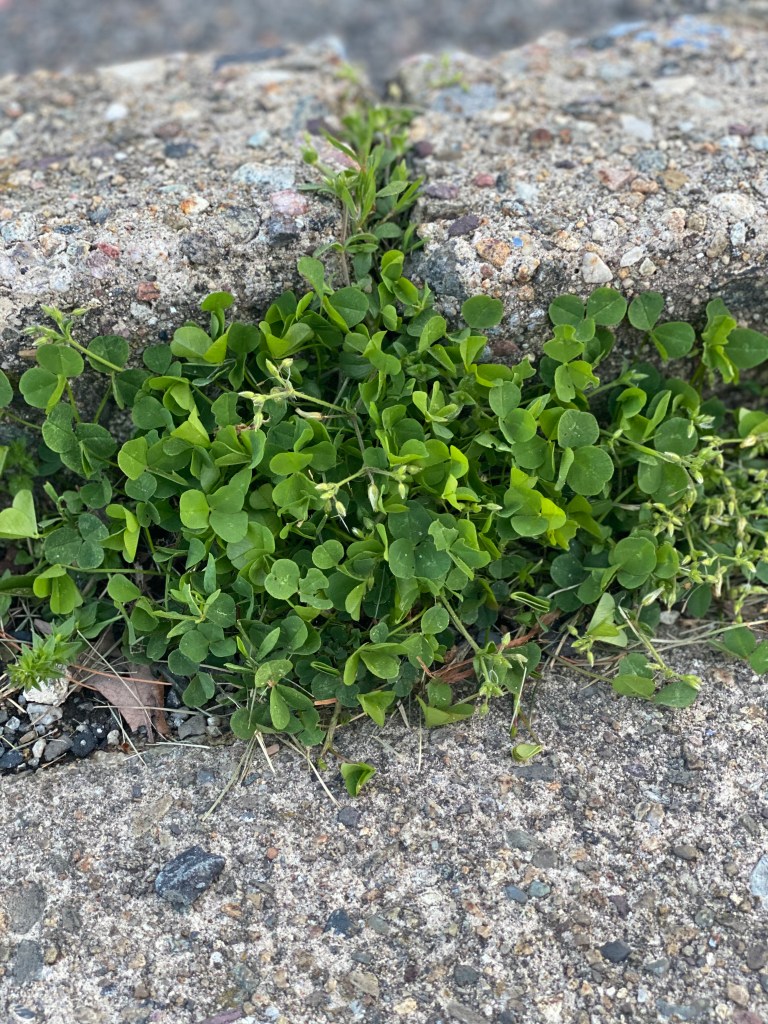
Vaccinations are increasing, restrictions are lifting, and people are testing out various ways of engaging in social activities. 

There have been a lot of things I’ve relished through this passing season of isolation.

I’ve enjoyed beginning friendships with people around the world I likely never would have engaged with if I was caught up in my in-person life a few years ago.

I’ve loved the variety of online churches, podcasts, and blogs I’ve been able to seek out. 

I’ve loved gathering around the table, sharing a meal with my family during a service or event.

I’ve loved being able to pause videos and discuss questions or look up references, rewinding to get a second listen to something I missed or didn’t understand. 

I LOVE that I can’t remember how long it’s been since I stood awkwardly through an in-person church “Meet and Greet” moment in the middle of a service.

Quarantine has been a really good excuse not to participate in uncomfortable things.

It can be temptingly easy to hide behind a laptop screen, text wall, and quarantined home instead of engaging with people.

I legitimately stand by our decisions about the level of separation we engaged in…..and….It can also turn into an excuse.

But Covid and other physical health issues aren’t the only reason we end up separated and isolated. 

My season of separation began long before Covid was a thing.

Getting divorced in a culture which holds to (largely unwritten) beliefs about divorce being one of the only sins which wasn’t covered on the cross (along with homosexuality, views on hymns vs. choruses and coffee’s place in a sanctuary) will drastically limit your involvement in many circles.

So will questioning the practices and rules of your faith system.

And like the isolation of COVID, there can be benefits to having some time alone AND it can become a shroud we choose to surround ourselves with, keeping ourselves quarantined and isolated because of the words and actions of others, and by our own choices. 
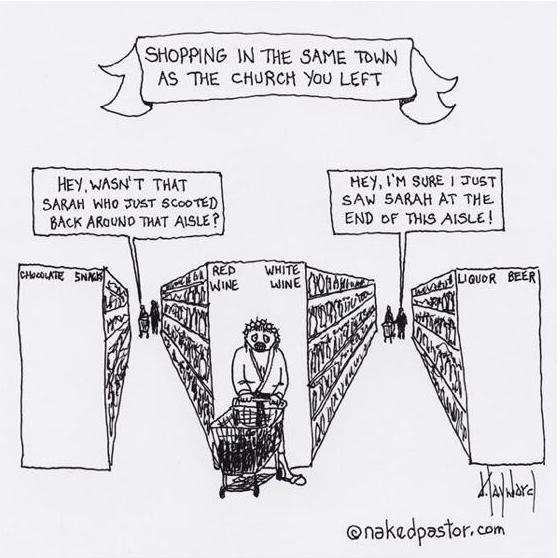
As the ice melts, the vaccines roll out, and my counselor gently challenges me, I feel the possibilities of the world opening up. 

The world opening up is not just about getting back to what we’ve always done.

Any season of separation or change is an opportunity to re-evaluate how we want to engage moving forward. It’s also a challenge to stretch out and strengthen muscles which have atrophied during lack of use. 

One new friend told me they feel like they’ve forgotten how to do date nights, or anything special. 

How do we re-engage in relationships intentionally – not just falling back into old patterns, but taking the time to evaluate what’s important to us, what our boundaries are, and what creates healthy relationships?

How do we dig out from under old habits, rules, and expectations we used to be buried under to Uncover Real relationships?

I don’t know.

But I’m looking forward to spending Season 2 of Uncovering Real exploring how we evaluate and pursue healthy relationships.

Join me here for Season 2 of Uncovering Real every Monday, Wednesday and Friday as I walk through different relationships (Mondays), reflect on what relationships have to do with faith (Wednesdays) and highlight artists that challenge and encourage me (Fridays).

Join the conversations on Facebook, Instagram and Twitter throughout the week and enter your email below to get blog posts directly in your e-mail inbox.


On Wednesdays We Reflect: Sacred Simplicity

I still make so many things so complicated. But I’m learning simplicity.

Tonight I prepared a few favorite foods and shared them with people I love. Recipes we’ve had before but changed up tonight based on the ingredients I had available. A simple plate of halva shared over conversation for dessert.

The simplicity of nourishing our bodies and our relationships at a shared table can be holy.

The simplicity of the dinner table can be a sacred space of connection.

The simplicity of a short after-dinner walk with the warmth of spring and the light of the evening stars can be hallowed ground.

This is part of what I want to walk towards. There are so many places that life is complicated and hard and draining. Simplicity lets me breathe in these moments, preparing my body, mind and soul to continue to face the spaces that are complicated, hard and draining.

Spicy Miso Pasta and pistachio halva don’t hurt, either.

Image contents: The last lonely chunk from our plate of pistachio halva.

Walking Away, or Walking Towards?

A few years ago, I was in a season of “no.”

I felt like everything I was doing was walking away from things.

And while I needed to be walking away from the things I was walking away from, I didn’t feel like I was walking towards specific good things, only away from toxic things.

Decluttering can be similar.

I have spent a lot of time over the past 6 weeks focused on decluttering – the “walking away” aspects of uncovering real.  Walking away from things, walking away from clutter, walking away from a life driven by mindless consumption.

This has been an important part of “uncovering real” – the removal of what covers over real.

I am excited to spend some time now exploring things to “walk toward” – the embracing of the real that exists under so many of those layers. 

So, I am planning on spending the next few weeks walking towards connecting: 

Connecting with my environment – time outside every day in the real world

Connecting with my food sources – growing some ingredients myself and purchasing real food from local vendors when possible

Connecting relationally – intentionally growing real friendships and relationships with people

I’m looking forward to sharing the ways I’m connecting, and if you have a favorite hiking trail, recipe, farmer’s market, or tips about other ways you connect with the world around you, send me a message!

Goodbye Lent, Hello next steps

Yesterday was Easter Sunday, the final day in my Lenten commitment to decluttering my house. 

I looked back today and reread what I had written on Ash Wednesday, over 6 weeks ago, at the beginning of my decision to blog through my process of decluttering my home and my faith in an effort to uncover real:

“When I turned the calendar this week and saw Ash Wednesday, I was filled with longing for the night I spent bearing those ashes. More than just a night in a sanctuary, I am longing for the “real” that the Pastor spoke of. I am tired of façades, tired of being burned by hypocrisy (my own and others), and I’m craving real. Maybe you are, too.

In one of my first experiences with Lent, I accepted a challenge to only eat unprocessed foods for a Lenten fast. I hated it. Every part of it. At the end, I excitedly went for some random junk food I’d been looking forward to, and it tasted like crap. I had developed a taste for real and now nothing else would satisfy.

Many of us are not attending in-person services this year, whether due to COVID-related issues, disenchantment with the church, a faith deconstruction process, or any number of other reasons. Despite all my issues with attending, not attending has left a void. 

I’m craving real. Real relationships, real faith, real hope, real joy, real me. Like the fast I did several years ago, I want to take a hard look at my life and address where I have been exchanging real for counterfeits, cheap replacements, and fakes.”

As I look back over these past couple months, I can see and feel so many benefits from the steps I’ve taken so far and I am so grateful for the conversations they’ve sparked with others along the way.

I love how my home feels when it greets me every day. I love the peace it gives to my family.

I love the conversations I’ve had with others on worth, value, dignity, priorities, self-evaluation, shame, truth and grace. 

I am excited to keep taking steps towards real in my relationships, my body, my faith, my hope, my joy, and all of my life.

Thank you for your encouragement and challenge along the way, let’s keep going together!

Image contents: My cup, overflowing with joy. Ok, so it’s actually a mug with the word “joy” imprinted on the side, which I filled a touch too fully with coffee, so the foam is peeking over the brim, but to me, it’s a cup overflowing with joy, as I look forward to continuing to experience and write through my journey to uncover real.

Friday Reflections: Out and In

One of my favorite quotes, which has motivated me countless times in clearing space in my life, is from the forward of a book I read a number of years ago, during a communal Lenten Fast. It said, 

“taking in, taking in, taking in. It clogs the soul.”

I think about this quote a lot.

It’s easy to think the answer to clogging our lives, homes and souls is to just stop taking in. Or to get rid of the clogs and stop there. 

Which brings me from one of my favorite quotes…to what used to be my least favorite parable:

In these verses, as in so many other verses, Jesus was replying to Pharisees’ questions and accusations by offering them an illustration: 

 “When an impure spirit comes out of a person, it goes through arid places seeking rest and does not find it. Then it says, ‘I will return to the house I left.’ When it arrives, it finds the house unoccupied, swept clean and put in order. Then it goes and takes with it seven other spirits more wicked than itself, and they go in and live there. And the final condition of that person is worse than the first.”

I always hated this passage.

I figured at best, it was a reason not to bother cleaning. At worst, it was hopelessly depressing.

Either way, I missed the point. 

Until someone sat with me and explained it in terms of nature abhorring a vacuum. 

The person cleaning house stopped before a crucial point. They stopped at the emptying. 

We see this all over:

We stop a time-consuming job or habit and the saved time automatically gets sucked up by something else.

Condemned buildings and abandoned lots are cleared out, with no plans for ongoing utilization of the space and they become overrun with drugs and crime.

We stop a bad habit, only to find we’ve replaced it with a worse habit. 

It’s not enough to stop taking in.

It’s not enough to clean out.

It matters what we then fill the clearing with.

When Jesus overturned tables and cleared out the temple, he wasn’t simply getting rid of clutter. 

It wasn’t about the “out.”

It was about the “in.”

It was about what, and more importantly WHO he was making space for. 

On Wednesdays We Reflect: Week 5 Reflections

Shame puts a spell on us. 

I watched a documentary this week on the college admissions cheating scandal Operation Varsity Blues. The documentary highlighted Rick Singer (as the orchestrator of the admissions scam), as well as a sampling of the parents who had participated. One parent especially stood out to me. According to the narrator, this working mom went from “I feel guilty about working and not spending more time with my children” to “I am a bad mother” to “I need to arrange to have my child attend the best school possible, even if I have to engage in illegal and illicit activity to get my child through admissions.” 

Shame comes when we internalize guilt.
Guilt says we made a bad decision.
Shame says we are that bad decision.
Shame says we are the sum of all of our bad decisions and mistakes. When shame becomes part of our identity, it affects our body, mind and soul. It affects our ability to make good decisions, which then cements the shame cycles.

Once we believe the voice of shame, we often become susceptible to relinquishing control of our decisions to someone else, hoping they will provide a solution for our shame. For the mom in the documentary, guilt about not spending more time with her children turned into the shame label: “I am a bad mother” and the narrator commentated that Singer was then able to manipulatively lead the shame-filled parent into illegal behavior.

I may not face someone convincing me to drop a few mil on getting my kids into their reach schools, but my own susceptibility is no less real.

Living with internalized shame leaves me susceptible to people and situations that are all too willing to capitalize on that susceptibility, whether it’s a college admissions counselor offering side doors to the country’s top universities, a manipulative relationship in my personal or work life, or the products lining the aisles of Target, enticing me to stash all my shame in a woven rattan box and close the lid.

The hope is in the actual antidote to shame, which Brené Brown identifies as empathy.

Speaking out, breaking the power of silence and secrecy and then being met with empathy in place of judgment is the antidote to the poison of shame.

I don’t believe in fairytales, but I do believe one empathetic voice can break the spell of shame.

I believe in the power of emptying, acknowledging and addressing the contents of the woven rattan box in a space free of judgment.

This is how I’m learning to see Jesus:

Holding space for me to bring my boxes of hidden shame, removing the lid, acknowledging the contents and addressing them. 

Speaking truth with empathy and with empathy drawing out the truth. 

Breaking the spell of shame.

Week 5, Day 3: Breaking News

We interrupt our regularly scheduled programming for an important update:

Today I had an epiphany.

Like, a this-is-life-changing-while-also-super-obvious-why-didn’t-I realize-this-earlier-I-even-wrote-a-whole-post-about-it, kind of epiphany.

I am not motivated by shame.

I am stressed by shame.

I am physically afflicted by shame.

I am not motivated by shame.

And yet somehow, when I started this journey, I thought the most helpful and motivating thing for myself would be to keep every single item I am removing from my home in one place, so I could see the impact all together. (Read: so I could sit at the end of the challenge and wallow in a big old pile of shame clutter and hope those shame surges would motivate me to not bring so much stuff into my house in the future.)

Here’s what actually happened:

Everyday I put more and more donation items in my son’s bedroom (while he is away at college).

I balanced bags on top of boxes on top of bags. 

I got multiple piles in and started thinking about how I need to go back and re-organize what’s in there, since I realized partway through, I will likely give different types of items to different organizations.

I spent a significant amount of time with the back of my head clogged with thoughts about how I needed to Organize.The.Clutter.I’m.Giving.Away.

Let that sit a second.

Every time I go in the give-away room I’m stressed at trying to find a place for things, to the point that some things have lingered in other rooms instead of going straight to give-away because I was avoiding going in there. 

Then yesterday I decided to move some furniture around in my living/dining room.

As I walked into the rearranged room today, I caught my breath at how beautiful and peaceful it was.

I instantly wanted to do more and have that feeling in the rest of the house. 

That motivated me.

It made me feel free, lighter, peaceful. 

Right then I decided to immediately get rid of as much of my donations as possible. 

I walked outside and stuck a sign on the front yard, along with a post in my local swap and sell group that I was having a “donate what you can, if you can” sale, along with a donation link to my favorite non-profit.

It was late in the day for an outdoor “sale” and very last minute, but even so, a number of items now have very happy new owners and the non-profit has a little more money than they did yesterday. 

There are still lots of things left, so I plan to put the remainder out for one more day. Then I’ll box anything left back up, deliver it this week, and let the house and myself breathe a little deeper and feel a little freer. 

Because it turns out, being able to breathe a little deeper and a little freer is what really motivates me. 

On Wednesdays We Reflect: Week 3 Reflections

Have you ever read the book Little Bear?

It was one of my favorites as a child, and one of my favorites to read to my own children – probably in part because I love Maurice Sendak’s illustrations. In the chapter, “What Will I Wear,” Little Bear looks out the window at the falling snow and even before he steps out into it, he tells his Momma, “Momma I’m cold, I want something to put on.” 

Momma Bear sews him a hat and sends him out to play in the snow.

Soon he returns, still cold. His Momma gives him another layer and sends him back out.

Every time he goes out to play, he comes back, asking for more, and every time his Momma puts down what she is working on and sews him another layer – a hat, then a coat, and eventually even snow pants. Still, Little Bear returns cold.

Finally, Momma Bear stops and considers all that she has put on him. She offers Little Bear one last solution, a fur coat. YES, says Little Bear. But instead of adding another layer, one by one she removes all the layers she had covered him with that day. 

Look, at your fur coat. Now you will not be cold, she told him.

And he wasn’t.

All Little Bear needed was the fur coat he was born with. It was enough, and every layer added detracted from it.

Throughout this uncovering project, I can see spaces in my home, and my life, filled with my own versions of those hats, snow pants, etc. 

How many times have I seen my kids be interested in something and respond by burying them under a mound of supplies I think they may “need” to pursue that interest, completely overwhelming them and stifling creativity instead of nurturing it?

How many times have I tried to solve problems by buying more stuff, adding more layers?

Then the even harder questions:

What are the layers that have been put on me, and I have put on myself, and others, to make me and/or my spirituality ‘enough?’

I asked a few friends who grew up in the church to share things they were told were expected of them as ‘christian’ women. From their experiences (and mine), we have been told, to be a ‘christian’ woman, we must:

Cook
Sew
Entertain
Be quiet
Be friendly
Be kind
Be generous
Always be prepared to give an answer to explain your faith
Don’t preach or teach
Hide your doubts
Dress modestly
Attract a husband
Praise (and defend) your husband
Have children
Take care of the children
Teach Sunday School
Keep the children quiet too
Braid your hair
Don’t be concerned with braided hair
Proverbs 31 in the streets and Song of Solomon in the sheets
Be submissive, be a helpmate

Some of the things on this list may perhaps lead to women who are more well-behaved (in some people’s minds and according to some people’s standards). Some of these things may even make some women feel more well-liked or accepted (in certain circles).

But many of the items on this list are far too often used as tools of control and manipulation, perpetuating toxicity and abuse in many church communities. 

As a follower of Christ, I believe I am to be continually growing and maturing, following the example of Christ. This list, however, does not make us Christian or make us any more or less loved by God.

Like Little Bear, each successive layer just makes us colder, as they cover up how we were created to thrive. The uncovering process I’m engaging in, the search for real, is the hard work of stripping away all the layers of human expectation, often one by one, to reveal my perfectly designed fur coat, which has been hiding underneath the entire time.