Easter Reflections: Who Lives, Who Dies, Who Tells Your Story

When Jesus cleared the outer courts of the temple it was about far more than what and who he was clearing out.

It was also about who He was making room to let in.

Jesus was clearing space to welcome

the foreigner

the poor

the oppressed

the discriminated

the marginalized.

The religious leaders of the day set up a system designed to keep people out, and put people down, in order to maintain and reinforce their own power. They were using exorbitant fees, gross exchange rates, and extra rules to enforce exclusivity and increase shame.

On what we now call Easter, Jesus continued the process of making space for inclusion as he announced his resurrection. Women at the time were so marginalized and devalued their testimony was not even considered credible in a court case. Yet it was women he first entrusted to tell his story.

The entire Passover celebration, from the preparation to the final glass of wine, reinforces the theme of liberation and the pull of slavery. The religious leaders of the day had turned what was intended as a celebration of liberation into an act of oppression. Every act of Jesus during Holy Week was intended to set the oppressed free once again.

I believe Jesus is still drawing people out of oppression, out of the ways we marginalize, judge and oppress each other.

Jesus also still seeks to rescue us from the slavery of the things we think will set us free.

For the past forty days as I’ve decluttered my stuff, I’ve had to process through new ways of thinking of how I interact with things, and what I prioritize: What’s out, what’s in? What oppresses and what sets free?

The past year+ of Covid19 has made many of us process through what we prioritize, what’s in, what’s out, what oppresses, what sets free?

I believe the story of Easter, and the entire life of Jesus, calls us to work through a similar process. What are we holding onto because it is tradition? What are we holding onto because it makes us feel comfortable? What are we holding onto that keeps us in power while making the marginalized, poor, foreigner and oppressed unwelcome in our spaces?

What are we holding onto that covers over real?

What are we willing to let go of to make space for others?

What are we prioritizing?

Who are we prioritizing, who are we giving power to, and who are marginalizing?

Week 4, Day 1: Cleaning Supplies

Having everything breeds isolation. 

Except maybe if having everything includes owning a beach house, then I’ve heard you may never experience isolation again.

A beach house we once rented had a sign in the kitchen that read:
“You never know how many friends you have until you own a beach house.”

My neighbor used to have a bumper sticker on the back of his pick-up truck. 
“Yes, this is my truck. No, I won’t help you move.”

I get the frustration behind those sentiments. They both seem to be reacting against a feeling of being taken advantage of.vBut without veering into taking advantage of people, I think owning everything ourselves can limit opportunities to connect and create community.

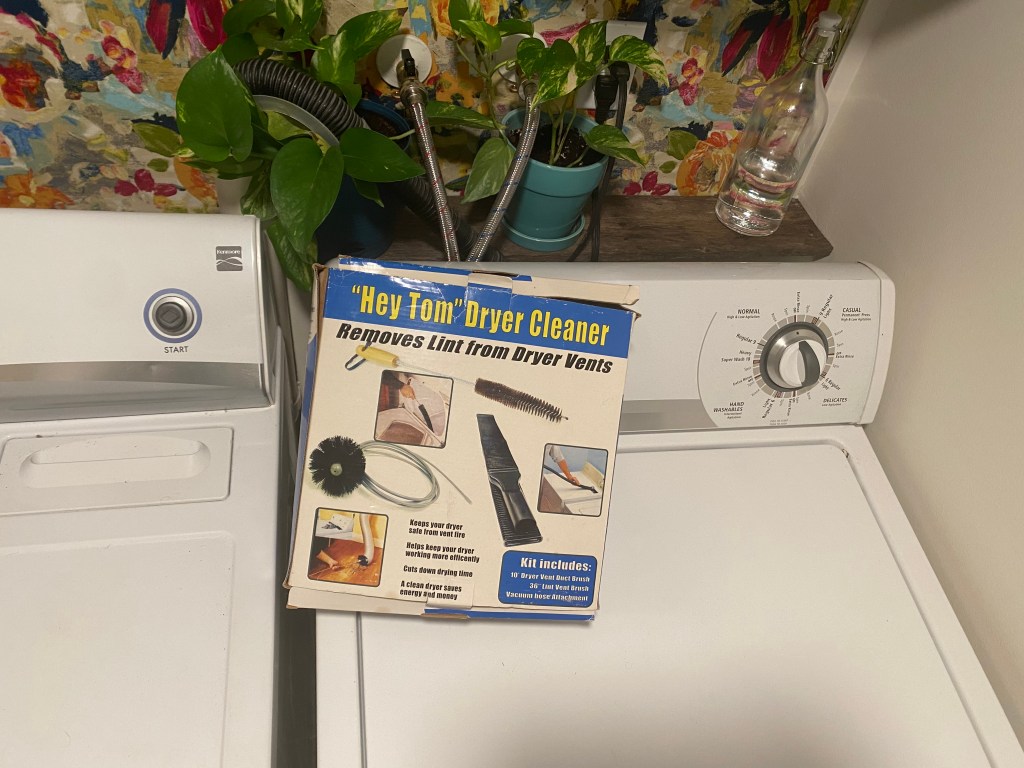
As I was going through my cleaning supplies today, I came across a dryer vent cleaning kit. Many, many years ago a neighbor friend and I split the cost of the kit. I have no idea why we decided to split the cost of a dryer vent cleaning kit, but we did. And now a couple times a year, one of us will text the other,
“Hey, do you have the dryer kit?”
And we’ll trade it back and forth.

Over the years we’ve also traded camping equipment, kayaks, life jackets, crock pots, and countless other items. Usually, those trades end up including a front porch or kitchen table conversation, sometimes over a cup of coffee.

I love those conversations. 

Each exchange then becomes an opportunity for connection we might not have if we both owned it all ourselves.

I love this concept of relationship and community through shared stuff, instead of owning everything.

Less stuff taking up room in our garages and basements, more shared coffee and conversation. 

Sign me up. 

On Wednesdays We Reflect: Week 2 Reflections

We’re two weeks into Lent – a time of fasting, abstaining from something in order to refocus, reflect, and rededicate yourself.

Lent is based on the 40 days Jesus spent in the desert wilderness, fasting from food, fasting from interactions with others, fasting from almost all elements of his daily life prior to this isolated season.

His fast was not about the visible elements of the fast.
It was a season of preparation for him.

He had spent time building into his disciples, healing people, challenging traditions and assumptions and teaching and caring for people. Now he faced a period of temptation.

In his desert time, he was challenged to break his fast.
Tempted to abandon what he started.
Tempted to redefine what he knew to be true.
Tempted to self-protect and self-promote.
He was tempted to make it about the visible elements. 

I have tried fasting in different ways in the past. Those times can easily become about the elements of the fast. I can become proud of my accomplishments or distracted by the practicalities. The very thing I am using to refocus myself, can become the focus. The abstention becomes the idol. 

But when I use fasting as a tool, a season of evaluation and preparation, it can show me where my priorities have shifted. 

I began listening to The Minimalist Podcast this week and in episode 276, Ryan Nicodemus talks about picking up an object and experiencing a flush of nervousness about decluttering it. The anxiety can indicate attachment. I find the same thing in my life. If some thing or someone questions my beliefs and I bristle, it often reveals what I have become attached to.

I then get the opportunity to evaluate if I am gripping that belief because it is central to me and my faith or if I am gripping on to a layer because at one point it made me feel safe, comfortable, accepted, important, or self-righteous.

There are things that I have and will declutter from my home that were important and valuable in a season. I recently came across a box of math manipulatives that helped my kids through elementary math. They were important and helpful through their transition in growing up. Now, holding onto them takes up space and detracts. Likewise, there are elements of my faith journey that may have been important for a season but may need to be decluttered. 

As children in Sunday School or around the dinner table, many of us were often taught that in order to pray we must fold our hands and close our eyes. This is not biblically directed theology, it’s a helpful way to encourage children to focus. But if I hold onto that practice as central to my faith, I can’t pray while washing dishes. I can’t talk to God as I drive. Holding onto that rule can limit my faith.  Refusing to let go can stunt my growth.

Alternatively, I could decide that a life-sustaining medicine on my nightstand does not fit the vibe I’m going for in my bedroom and discard it. Just like I could decide peace and joy and hope and love don’t fit my life and cast them aside. Both would be deadly.

And this is the hard work of reflection.
This is the hard work of the season of Lent.

As I have discovered over the last several weeks, there are many layers to my physical possessions. There are also many layers in my beliefs about God and this world. Layers that I have put on myself, layers other people have applied, layers I sometimes don’t even know exist until something prompts me to question and reflect on them. 

May this Lent season be a season of shedding some of those layers that were never meant to be there, shedding the layers that were only meant to be there for a season, and a solidification of the parts that belong.