This week, I scheduled a technician for some work at our house. As I thought through where they would need to go in order to get their job done, I mentally started a checklist: Make sure they can safely get to the fuse box. Can they easily reach the other systems they need to access to get the job done? Where else might they need to go? A picture frame may need to be moved away from the fuse box, a rug may need to be rolled out of the way on the day they arrive, but in general, every access point I thought of was accessible.
No one would walk into my house and consider me a minimalist.
But if we had to have emergency services of any kind, I wouldn’t be distracted by needing to get a lot of things out of the way.
The daily work of decluttering and uncovering is not only benefiting how we live in our spaces each day, it’s also serving as preparation for emergencies and unforeseen circumstances.
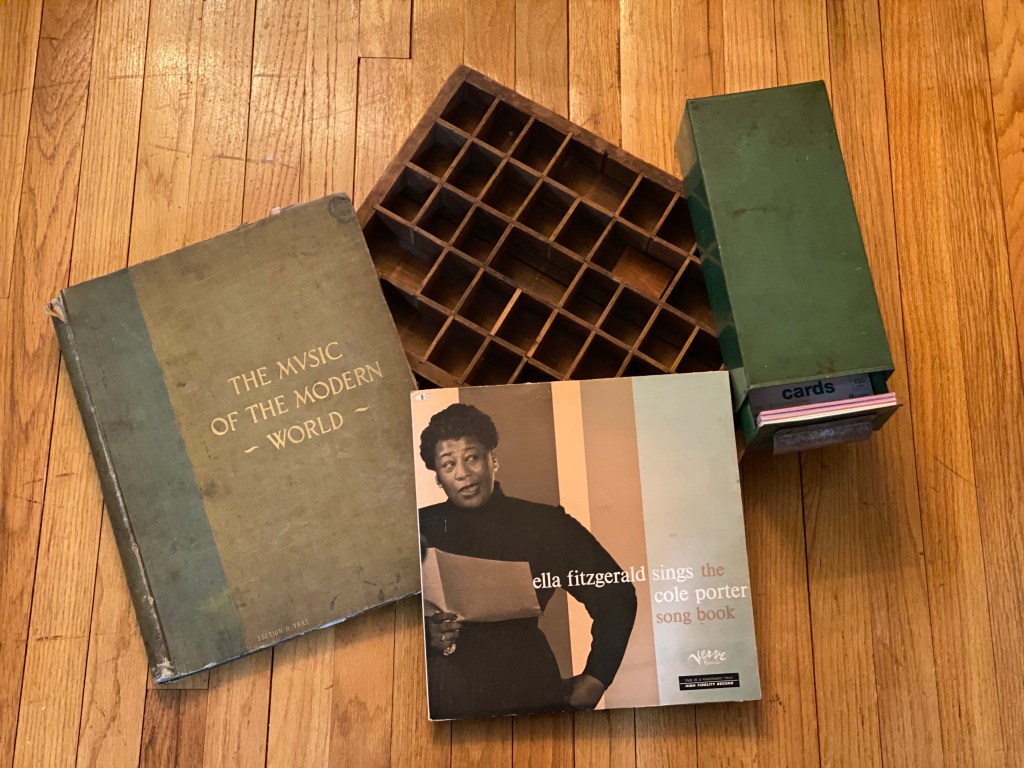
A few years ago, someone left me a message left me know a building full of antique stores near me was closing up and getting rid of all their remaining inventory, free for the taking. By the time I heard about it and drove over, people were carrying the last remnants out to dumpsters. I parked my van and began making trips from the basement of the building to my van and back, racing against the dumpster fillers. There was no time to evaluate, so I beelined for the items I thought I could most use, mainly old scratched records, antique books and vintage boxes. I pulled away from the complex a little while later, covered in dust, my van bursting with treasure.
Later, when I experimented with selling repurposed creations, I used a number of the damaged treasures I had rescued for upcycled projects like wreaths, bowls, and plate stands. Most of the rest of the items have sat collecting dust in my basement since the day I brought them home.
As I went through some of those collections today, I found myself repeatedly saying, “oh, this so cool.”
I realized what I meant was, “how could I get rid of something with so much potential to be used in a new way, or displayed in a great space, or appreciated for it’s rich history?”
But they were stuck on a shelf, in my unfinished basement.
So, what if “but they’re so cool” meant instead:
“how could I keep something with so much potential to be used in a new way, or displayed in a great space, or appreciated for it’s rich history?
The tiny change in words was a huge shift in my mind set. I’m not appreciating or using those items while they sit on my shelf, and I can give them to someone who might.
It was so freeing.
90% of my unused vintage records, bins and other “treasures”? buh-bye.
Room to breathe, joyful spirit and clear shelves for my newly sorted kids memory boxes? hello!
Image Contents: a few of my favorite vintage treasures. An Ella Fitzgerald record and file card box which have homes in my living room, so they’re staying; a letterpress tray and vintage music encyclopedias which do not, so they’re heading off to their new homes.
Even though minimalism experts like Joshua Fields Millburn and Joshua Becker talk about their decluttering process taking about three-quarters of a year, and other experts describe decades-long journeys, I figured six weeks should be enough time to get my house to clutter-free-a-place-for-everything-and-everything-in-its-place status. I mean, I’m not a hoarder. I don’t have a storage unit. My basement is a disaster, but I can park in the garage. Usually.
When I started, I felt I landed pretty squarely in the “normal” range of clutter, on the scale I made up. In my head. Based basically on my house not looking like either an episode of Hoarders or a minimalist magazine cover.
So today, six weeks into my decluttering journey, when I went to put a few things away and realized they didn’t have an easy permanent home, I was frustrated at myself. And when I gathered up a few things in a tote to “deal with tomorrow,” I felt guilty and ashamed. Hadn’t I just learned the lesson of “do it now” yesterday?
When am I going to reach the point of everything having a home and automatically putting it there?
Then I remembered two things. First, the “onion method.” Different people have different versions of what this means, but the concept always revolves around layers. Sometimes the layering is in a single decluttering session – like yesterday when Dana K. White’s method started with trash and the easy peasy stuff, then kept going through harder items.
Sometimes uncovering the layers happens over time.
A month ago, I decluttered my reusable grocery bags. Today I went grocery shopping and realized, since I’m not stocking up on grocery items as heavily, I’m shopping for less, and therefore don’t need as many bags as I had narrowed it down to a few weeks ago.
I started with what I thought I needed, then was able to peel back more.
The same thing is happening in the rest of my home. As I enjoy the benefits, see how I’m actually living, and build up my decision-making muscles, I’m often decluttering things as I come across them, and sometimes intentionally going back to spaces I know can function better with less.
I also realized everything not yet having a place for everything and putting a few things in a tote for tomorrow is not failure. There’s grace in the process. After all, I have a whole other week before my self-imposed deadline. 😉
Image Contents: an image of Shrek saying, “Onions have layers, Ogres have layers. You get it? We both have layers!” Because I can’t talk about onions having layers with Shrek and Donkey busting into my head.
One of the things I was looking forward to in this journey was gaining more of an awareness of what I have. It is so easy for me to live disconnected in so many areas – I don’t grow my own food, I don’t make my own clothes, life is increasingly virtual – especially this past year. The act of going through my possessions is bringing a level of awareness of what I own but it is also breaking through disconnection in other ways.
Going through my photos forces me to see what I have in a different way. It reminds me of the variety of experiences I’ve been able to have, from the births of my children, to bowling with friends on a random trip to Illinois; Singing in choirs from churches to Carnegie Hall to more outdoor adventures than I could remember; weddings, funerals, parties and memorials. It reminds me of relationships that have spanned decades and relationships that have come and gone, or changed significantly. It reminds me of the thoughts I had at the very beginning of this blog:
“The transformation from dust and to dust is not limited to just our literal birth and death, it is found in every season of our lives. In every season there are cycles of creation, dust, waiting and re-creation.”
Some photos were reminders of the dust, some were reminders of the cycles of creation I see in my relationships. I loved reaching out to a few friends and family members this week, sharing with them some of the little memories I found. I loved sitting with my child at the end of a long day, reminiscing and laughing at old school journals and projects.
And I love that there is still room my photo boxes. There are seasons of recreation still to come, and more photos to be taken.
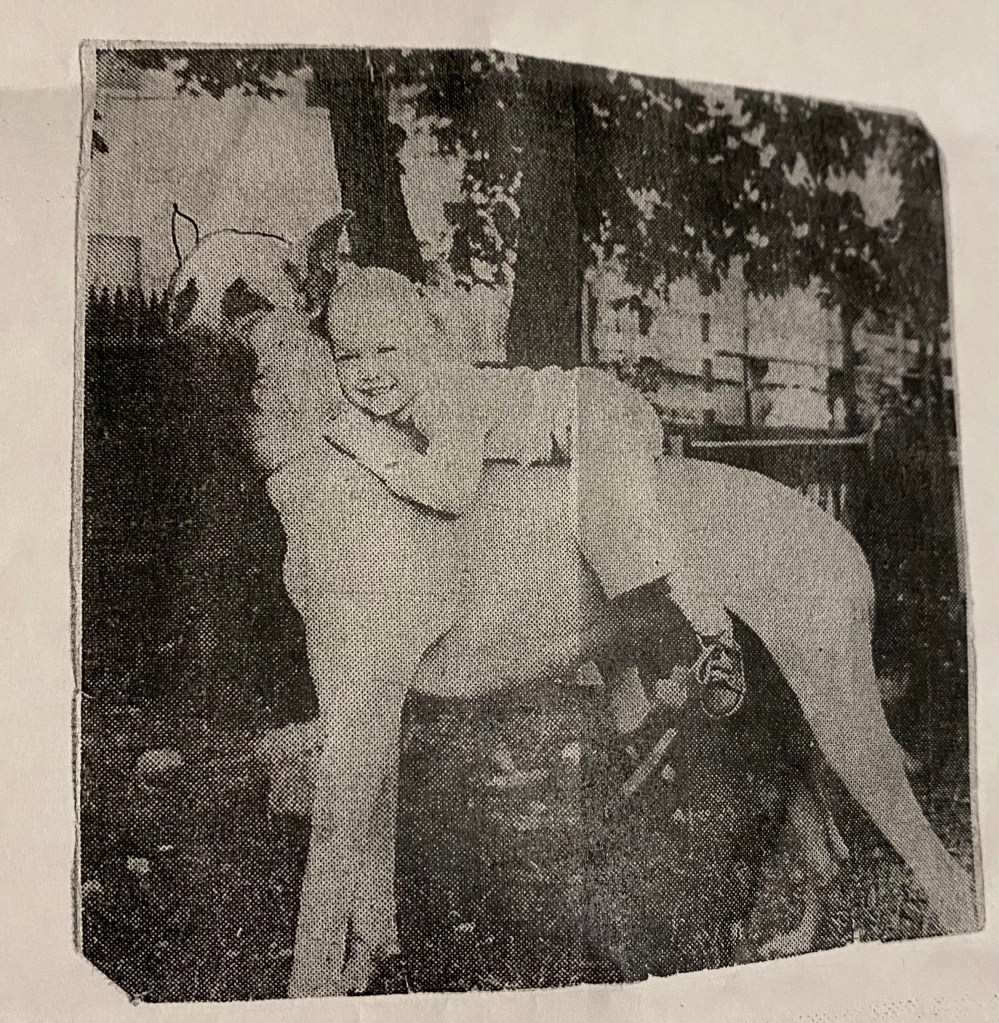
Image Contents: A throw-back photo of the author and her favorite childhood dog (a Great Dane), posing like horse and jockey.
There are experts who will tell you never to have a garage sale. (You end up storing stuff to wait for it, you never get a good return on your time, you waste time and money prepping for it, etc.)
There are experts who tell you to definitely have a garage sale. (sell EVERYTHING on your path to get out of debt, get rid of your stuff and make a little cash doing it, etc.)
I have typically been closer to the first camp. I’ve hosted a couple garage sales in the past, but they’ve always been fundraisers for specific organizations or causes I care about. For those, I gathered help, made a plan in advance for the leftovers, set up refreshments manned by adorable little bakers and lemonade servers, merchandized the inventory and advertised extensively.
This was the first time I’ve ever said, “hey, I should have a garage sale, right now, in the middle of the afternoon, while I’m home by myself and haven’t told anyone to advertise.”
A few things I learned anyway:
-It.is.exhausting. Even just the set up/tear down process of dragging everything out, dragging everything in when it got dark, dragging it back out the next day, dragging it to the garage or curb or car trunk after. Then comes getting rid of the leftovers, not to mention any time manning it.
-It is typically a horrible return on investment. Granted, some of the fundraisers I’ve had in the past brought in a very significant amount of money donated, and this one today most likely would have been much more profitable had I scheduled and advertised ahead, employed help, etc.
-If you tell someone you are having a garage sale, 99.9999999% of the time, they will offer you their own items to bring to sell. Or they’ll just drop them off at your house. when you’re not there. on your driveway. in unmarked bags. with no contact info.
-At least one middle aged or older man will drive by the garage sale and ask “well then, how much for the garage?”
-people will come by and say, “this is so nice, I can’t believe you’re just getting rid of it” and you will have to decide how much you want to tell a complete stranger about your journey to less stuff while standing with masks on talking across a lawn. Or the version from people who know you, “I can’t believe you’re getting rid of THIS!” (that comment from friends was usually referring craft items.)
After hosting my, uh, pop-up sale (does that make it sound more modern, inviting, and trendy than “last-minute garage sale?”) I confirmed garage sales are not my jam.
I loved getting to see some friends and neighbors I haven’t seen in at least a year. I loved gathering donation money from it. I loved getting rid of stuff. But it was 2 days of work I wasn’t planning on doing and I still have lots of stuff left to donate. (Plus two unidentified bags of donations.)
If you are getting out of debt or saving for a specific goal, go for it. Sell like it’s your job.
If you’re just trying to get rid of stuff, just get rid of your stuff.
For me, getting rid of (the rest of) my stuff is going to mean a little tour of donation centers over the next couple days and I can.not.wait to come back home after it’s all delivered and assess how everything looks and feels.
We interrupt our regularly scheduled programming for an important update:
Today I had an epiphany.
Like, a this-is-life-changing-while-also-super-obvious-why-didn’t-I realize-this-earlier-I-even-wrote-a-whole-post-about-it, kind of epiphany.
I am not motivated by shame.
I am stressed by shame.
I am physically afflicted by shame.
I am not motivated by shame.
And yet somehow, when I started this journey, I thought the most helpful and motivating thing for myself would be to keep every single item I am removing from my home in one place, so I could see the impact all together. (Read: so I could sit at the end of the challenge and wallow in a big old pile of shame clutter and hope those shame surges would motivate me to not bring so much stuff into my house in the future.)
Here’s what actually happened:
Everyday I put more and more donation items in my son’s bedroom (while he is away at college).
I balanced bags on top of boxes on top of bags.
I got multiple piles in and started thinking about how I need to go back and re-organize what’s in there, since I realized partway through, I will likely give different types of items to different organizations.
I spent a significant amount of time with the back of my head clogged with thoughts about how I needed to Organize.The.Clutter.I’m.Giving.Away.
Let that sit a second.
Every time I go in the give-away room I’m stressed at trying to find a place for things, to the point that some things have lingered in other rooms instead of going straight to give-away because I was avoiding going in there.
Then yesterday I decided to move some furniture around in my living/dining room.
As I walked into the rearranged room today, I caught my breath at how beautiful and peaceful it was.
I instantly wanted to do more and have that feeling in the rest of the house.
That motivated me.
It made me feel free, lighter, peaceful.
Right then I decided to immediately get rid of as much of my donations as possible.
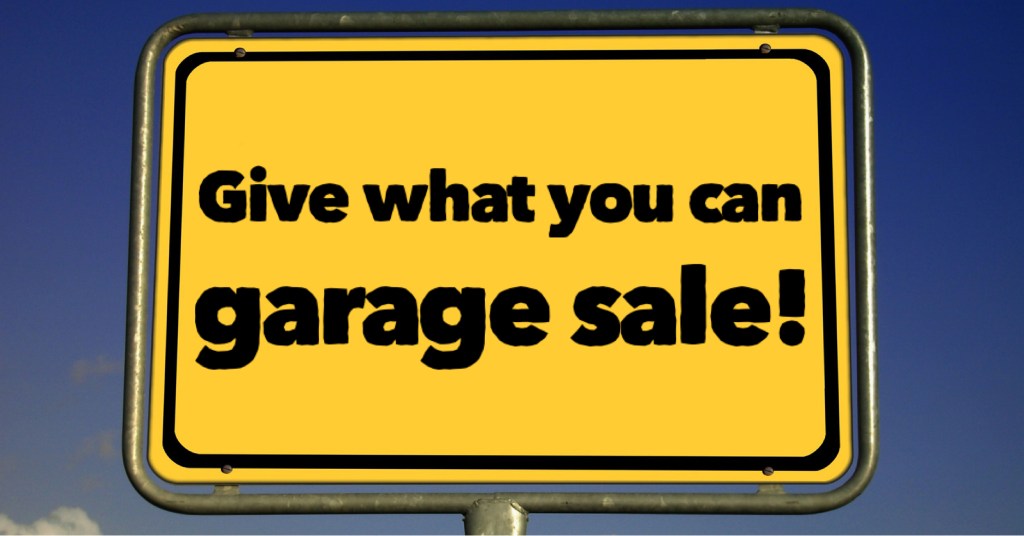
I walked outside and stuck a sign on the front yard, along with a post in my local swap and sell group that I was having a “donate what you can, if you can” sale, along with a donation link to my favorite non-profit.
It was late in the day for an outdoor “sale” and very last minute, but even so, a number of items now have very happy new owners and the non-profit has a little more money than they did yesterday.
There are still lots of things left, so I plan to put the remainder out for one more day. Then I’ll box anything left back up, deliver it this week, and let the house and myself breathe a little deeper and feel a little freer.
Because it turns out, being able to breathe a little deeper and a little freer is what really motivates me.
(in case you’re confused about the difference between smack talk and trash talk, here’s a helpful tutorial from Kelly Kapoor)
I open up my cabinet and the Instant Pot taunts me: “how many times have you really pulled me off this shelf and used me?”
I open my closet and clothes scream, “hey there, chubby, you don’t think you could actually wear me, do you?”
I open a drawer in my craft dresser, and the watercolor pencils say, “woah, remember the last time you tried to use me? You were soooo bad at it!”
Everywhere I have clutter, there is a voice emanating from it. And they’re rarely kind:
“quitter”
“worthless”
“idiot”
“slacker”
“slob”
“loser”
“hack”
And those voices aren’t just mean. They’re loud. Loud enough to drown out other voices I want to hear and need to hear.
Some of my things actually have beautiful voices. I love fresh flowers and I usually keep a few small arrangements in different rooms of my house. Sometimes it’s just a few sprigs of pine or wildflowers from the yard, sometimes it’s a bouquet from the grocery store, but those flowers typically sing reminders to me that there is beauty in the world.
I don’t want to drown out those beautiful voices.
I also don’t want to drown out the voices that truly help me become a better person.
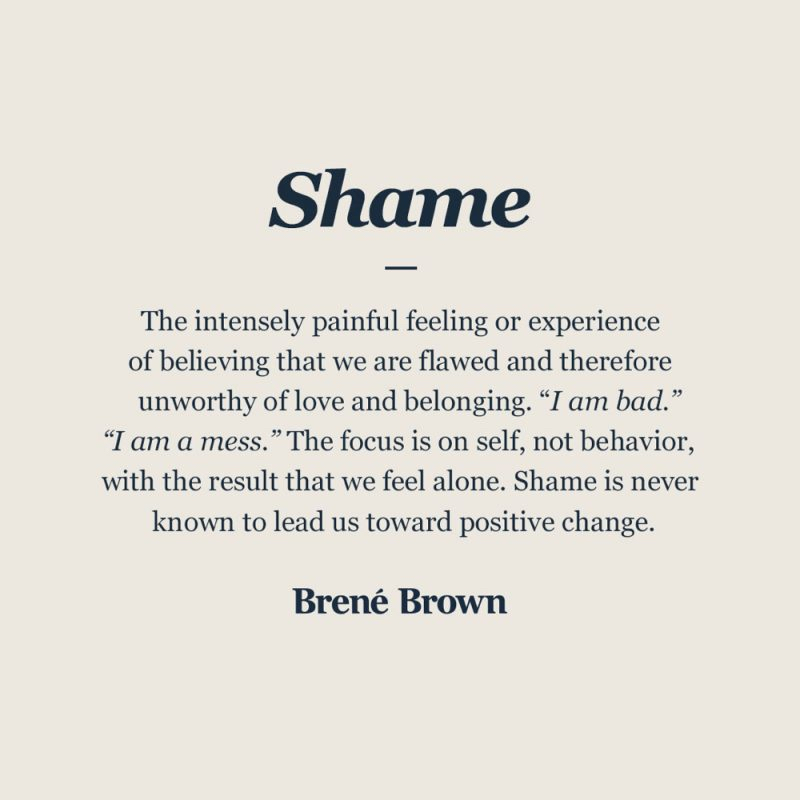
But clutter doesn’t make me become a better person. Clutter doesn’t speak encouragement or motivation, it speaks shame. And voices of shame rarely motivate us to grow. In fact, researcher, author, and speaker Brené Brown defines shame as,
“the intensely painful feeling or experience of believing that we are flawed and therefore unworthy of love and belonging – something we’ve experienced, done, or failed to do makes us unworthy of connection. I don’t believe shame is helpful or productive. In fact, I think shame is much more likely to be the source of destructive, hurtful behavior than the solution or cure.” (you can find more of Brené’s work here)
I hear the watercolor pencils tell me I am flawed every time I open the craft drawer. I feel the shame of unworthiness when my closet is filled with clothes that don’t fit.
As I declutter my home, I am realizing how powerful those voices can be, even when I don’t realize they’re speaking to me. They can create shame patterns that spiral into the hurtful and destructive cycles Brené acknowledge.
There are a lot of voices I need to listen to, like the voice that tells me I am wonderfully made, fully and beautifully loved.
I also need to listen to the voices that help me grow – like the voices of loving friends, or the fresh veggies calling out to be chosen over the leftover soda bread.
It’s one thing to silence the voice of an underused Instant Pot, accessory or craft item. It would be a whole other thing to try to silence the voice of an upside-down budget by shredding your bills instead of paying them. I’m not advocating for shirking responsibility but reminding myself that it’s ok to remove voices that speak unnecessary and destructive shame from my life in order to clear space for what is really necessary and beneficial in my life.
Today I took a break from slogging through a few disaster zones in my basement and came upstairs to empty the dishwasher.
<pause for a moment of gratitude for a working dishwasher>
As I put a clean measuring spoon back in its holder, I noticed a couple sets of measuring spoons already there. My daughter and I love to bake, and I have kept a few sets of measuring spoons on hand for years so we can measure out multiple ingredients without having to pause to wash measuring spoons in the middle of a recipe. But while I am incredibly happy to have a working dishwasher again, the last few months without one helped remind me that it actually is possible to wash all your dishes by hand, especially if you need a quick turn-around. Who knew?
I stacked up my favorite set of measuring spoons (the only ones narrow enough to fit in some of my spice jars) and removed all the others: Thank you for your service,buh-bye. As I turned back to finish emptying the dishwasher, I realized what had just happened.
The process of evaluating those measuring spoons was practically subconscious and completed before I realized what I was doing. All of the decision-heavy, time-consuming, slow work of decluttering each space and category of my home has been building decluttering muscles and forming habits in me.
Wax on, wax off, paint the fence, and wash the car – all along I’ve been reducing my tolerance for clutter and building not just declutter muscles, but decision-making muscles.
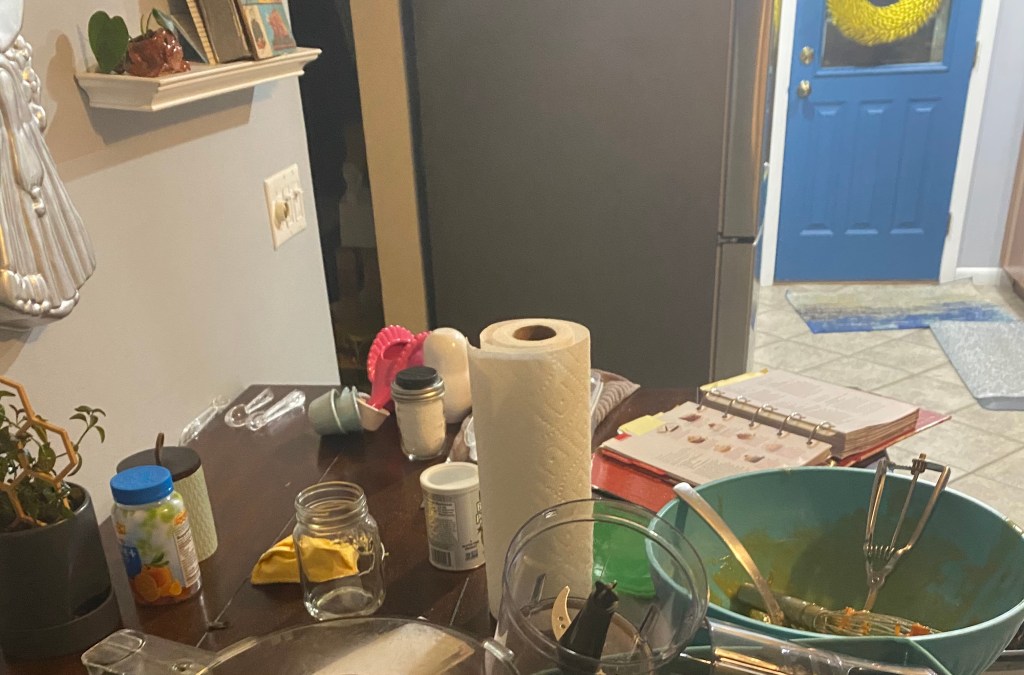
NOTE: This was where I was going to insert a calm picture of our charming pink dinosaur holding our only remaining set of measuring spoons. But someone used…quite possibly every baking tool we own while creating carrot cake cupcakes and cream cheese frosting tonight, and they are all currently strewn about the kitchen. (Did I mention how thankful I am for my new dishwasher?) We’re all about keeping it real here, folks.
So, what do I stock up on? Turns out, just about everything. I started making a list and it turned into a Dr. Suess book:
Embroidery threads and sheets for our beds Nails, hammers, and saws Paper party straws Jars of olive oil Pots with potting soil Clothing, hats and shoes Christmas cards with news Plates and stands for cake Crafts I’ll never make Paint to brush and spray Games we never play…
I could go on. but I won’t. you’re welcome. The point is, I stocked up on a lot of things. Even things I don’t typically use a lot of. The make-up I bought and wore pre-Covid then mostly ignored for a year? It really shouldn’t be used anymore. Most makeup can last about a year (more if unopened and sealed well) but apparently mascara has a shelf life of about 3 months once opened. I don’t use a lot of mascara, so I balk at the idea of the cost and annoyance of replacing it so often. but….I’ve also had a couple horrible eye issues in my life and after thinking through the cost and pain of those experiences…skipping mascara or buying a new one for the rare times I wear it doesn’t seem as bad as risking expired mascara.
You know what else expires? Almost everything.
Some things may be arguably safe past their suggested expiration dates. There are a lot of things that just get unsafe or unusable. The elastic on old socks gives up. Oil goes rancid. Paint separates and does not apply well or dries out. There are so many things in my house that are not only no longer useful to me, but no longer useful to anyone because they’ve passed their expiration.
For this week, this knowledge means cleaning out as many expired stock items as I can find. For the future, this means not only being thoughtful about purchases in order to limit future waste, but also building into my schedule a routine of checking for items past their usefulness, like checking cans of stain, etc. the week before the county’s hazardous waste disposal days.
It also means – use what I have! Don’t buy the great buy-one-get-one deal, if you’re only going to use one before it expires. Don’t save the specialty culinary oils for a special occasion. Enjoy it now!
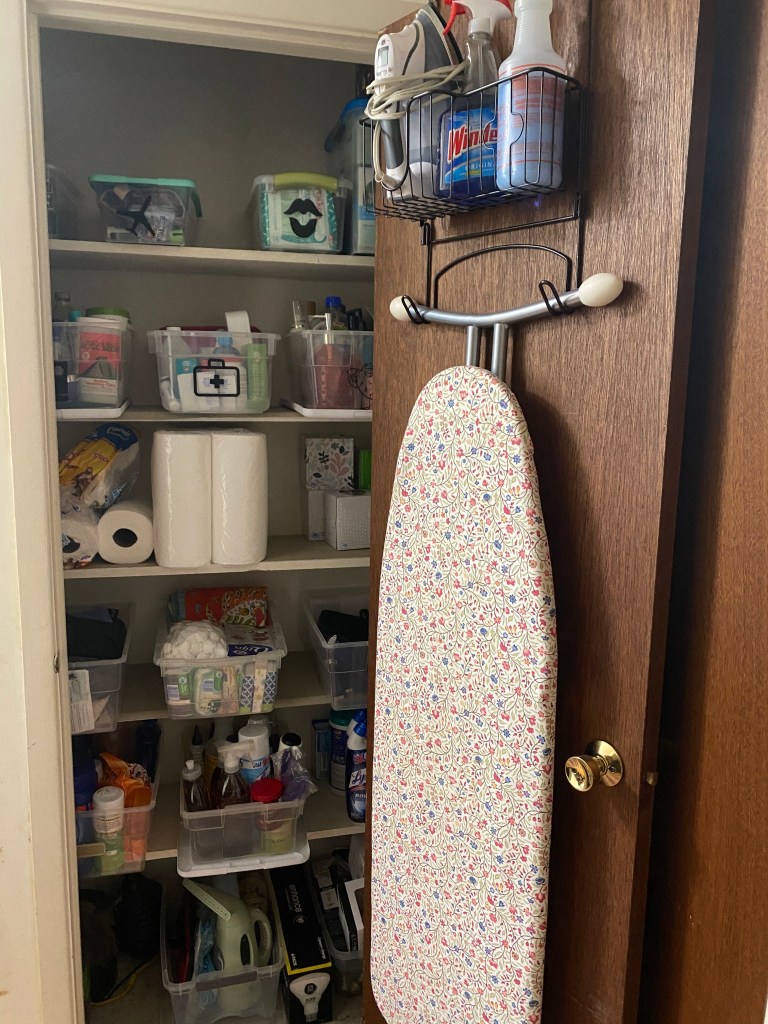
This week is all about “what do I stock up on?” So far I’ve look at my cleaning supplies and health and beauty items. Today I put my linen closet and bathroom vanity back together – the two places I most typically store those kinds of products. I even bought a new organizing product – an over the door iron holder. It has been sitting in my online cart since I cleaned out my clothes closet and decided it was the wrong place for the iron, but I refused to purchase the new holder until I cleaned out the linen closet and made sure it would work there. (I’m trying to retain the lesson from the metal boxes!) The ironing board holder works exactly how I wanted it to. The drawers I had added to my cart for under my bathroom sink, however, got removed when I realized that the lazy susan I no longer need on my kitchen table is the perfect solution. I’ll want to update the labels on my storage bins in my linen closet at some point, but everything now has a home, everything is reachable without knocking something else over, and everything is an item we use and like, all for the bargain price of $15.87 and a little time.
Check out Instagram for pics of the re-homed lazy susan in the bathroom vanity.


 Uncovering Real