BTS Week 12: Finals

We did it!!!!

For the last 12 weeks, we’ve worked our way through our homes and spaces with the goal of heading into the holiday season with more calm, noticing what works, subtracting what doesn’t, and adding tiny habits that make our lives feel gentler. No perfect-home goals here. Just small steps toward calmer spaces and truer reflections of who we are.

As we move into a season that can feel loud and fast, I hope you are heading into it with a little more space to breathe.

So…how are you doing?

I’ll go first: I was doing okay. I was doing the things. Not all the things, not all the time. But I was doing the things.  And then I decided to add one more thing.

Then another.

Then another. 

and before I knew it I had like 57 big giant things on my calendar over the next month. Why do I do this???

It’s easy to feel like a failure and let things slip. But last night I had a bit of a revelation.

Yesterday I saw a contractor my husband had scheduled arrive on our security camera and felt a spike of panic. I didn’t know they were coming. I hadn’t “gotten the house ready.”

Then I realized: the house was fine.

They could walk in and get to what they needed. Yes, a few things had to be moved where they were working, but there was space to move them. There wasn’t an avalanche of shoes at the front door. 

Even in this very busy season, I can feel the difference. I may be exhausted heading to bed, but my clothes are (usually) set out and tomorrow’s coffee is pre-measured. Less last-minute scramble. Less searching. 

Over the last three months we’ve tackled making our beds, setting out our clothes, simplifying mornings, doing the dishes, streamlining pantries, smoothing our entrances and exits, and making space for creativity.

We’re ready for finals.


The Final Exam

For our final exam, we have two images to compare/contrast and two questions to think about. That’s it. Oh, and it’s an open book exam – feel free to look back at any of our notes from this past semester. 

Image One:

(Where’s Waldo crowd scene)

Remember these books? “Where’s Waldo” has entertained thousands simply by hiding one striped character in a chaos of distractions.

Before you get too distracted trying to find Waldo, let’s move on to image two:

Image Two:
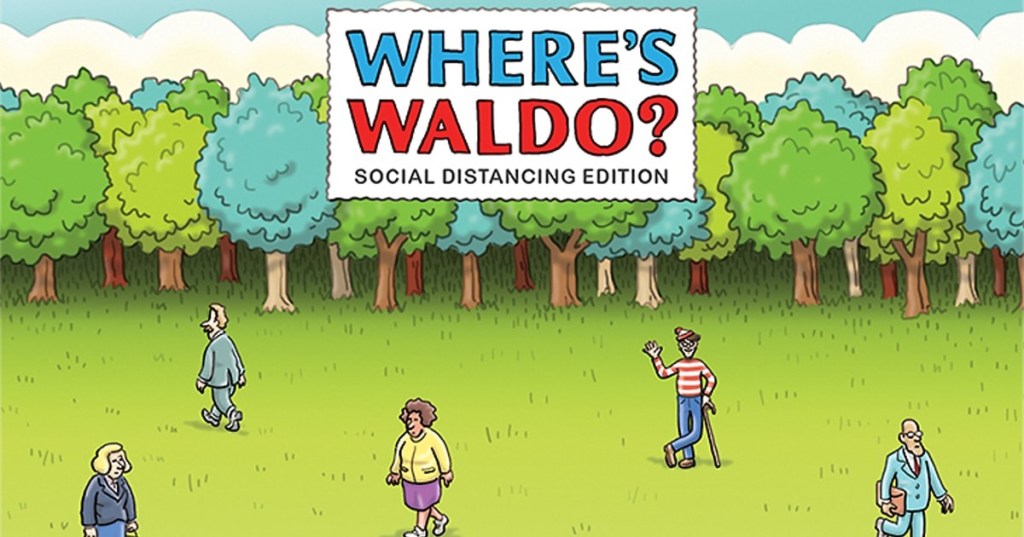
(Social distancing Waldo cartoon by Clay Bennett for the Chattanooga Times Free Press)

Now for our questions:
Which Waldo was easier to find?
What made it easier?

Here’s what I’m learning:

So often in life we create that first, harder version for ourselves, because we think the solution to not being able to find something is to add more. We want to find “Waldo” but end up burying him in a crowd.

Some examples that may or may not be personal testimonies:

  • I can’t find matching socks. So I buy a dozen more pairs of socks so I never lose a matched pair of socks again. Then the next time I need a pair of socks, I have to dig through a sock drawer version of “Where’s Waldo” looking for what I want.
  • My kids can’t find a snack they like in the pantry. So I buy 3 kinds of bars, 4 boxes of fruit strips and a Costco variety box of snacks. Now my kids have to swim through a life size Where’s Waldo page to find anything and the fruit expires before they can eat it all.
  • “I want more rest, more creativity, more joy.” So I buy the latest gadgets, tools, and systems promising to make my life easier. Instead, they add to the sea of tiny red-and-white imposters crowding out Waldo.

Adding more didn’t help me find anything. It just made more places to lose stuff.

The key to finding Waldo was never in just adding more.

It’s in less.

Like the socially distanced cartoon of Waldo above, when we simplify and remove the excess, what we are looking for is so much easier to find. 

Rest and creativity aren’t found by piling on more.

They show up when we remove the distractions and create space for them.  

That’s what these last twelve weeks together have been about: bedrooms and pantries, doorways and nightly resets, minimizing and giving tiny gifts to your future self:

Simplify, subtract, create space…and what matters slowly becomes easier to find.

Peace, calm, and joy don’t arrive because we do or buy more.
They show up when we make room.

This is the work  –  and the gift we’ve been giving ourselves for twelve weeks.

Let’s keep going.

Week 10: Thresholds and Doorways – Part Two (Addition)

Welcome to week 10, where we’re doing the hokey pokey, turning ourselves around, and heading back out the door.

Last week we talked about thresholds and the “doorway effect” – how walking through a doorway sends a signal to our brains to leave behind what’s on the other side. This often means forgetting why we walked into a room, buuuut, we can also use that effect to our advantage, letting go of the stress of the workday, the grocery store, or the commute and leaving it on the other side of the door.

When our entryways are piled with shoes, bags, and a box of cement (just me?), that transition can feel more like a continuation of traffic jam stress than a clean slate.

Last week’s focus was subtraction – clearing out a little clutter each day and noticing how people in your household move through the entryway space.

This week, we’re shifting to addition.


What do we take with us when we leave home?

Sometimes it’s stress – a frantic search for missing keys or that feeling of already being behind.
This week I want to take some small steps to make it something better: the calm of knowing where things are, small confidences of feeling prepared.

I love thinking of that prepared feeling as giving myself a little gift for the future.
When I put my keys in their designated home, it’s a tiny gift to future me.
And the next morning, I get to unwrap that gift – walking out the door just a little more calm, a little more ready.

I love that feeling.
And I want to take more of it with me as I step out each day.


This week: addition through intention

Let’s talk about what we can add this week to give ourselves that confident, prepared feeling as we leave our homes.

When I observed our entryway last week, I noticed that shoes are our main culprit. They’re almost always scattered around, in the way. Since the front door is literally in my dining room, it means that clutter is not just clogging up the entrance to our home,  it’s an uninvited guest at mealtimes and throughout the day, too. My instinct was to fix it immediately. But I know when I jump to solving as soon as I see a problem, it usually involves a “click, add to cart” solution. I want to slow down this week, and see what I can rearrange thoughtfully, with what we already have, instead of rushing to what Amazon tells me will solve all my problems.

Addition doesn’t have to mean more stuff.
It can mean adding thoughtfulness, intention, or a sense of peace to a space.


This week’s assignments:

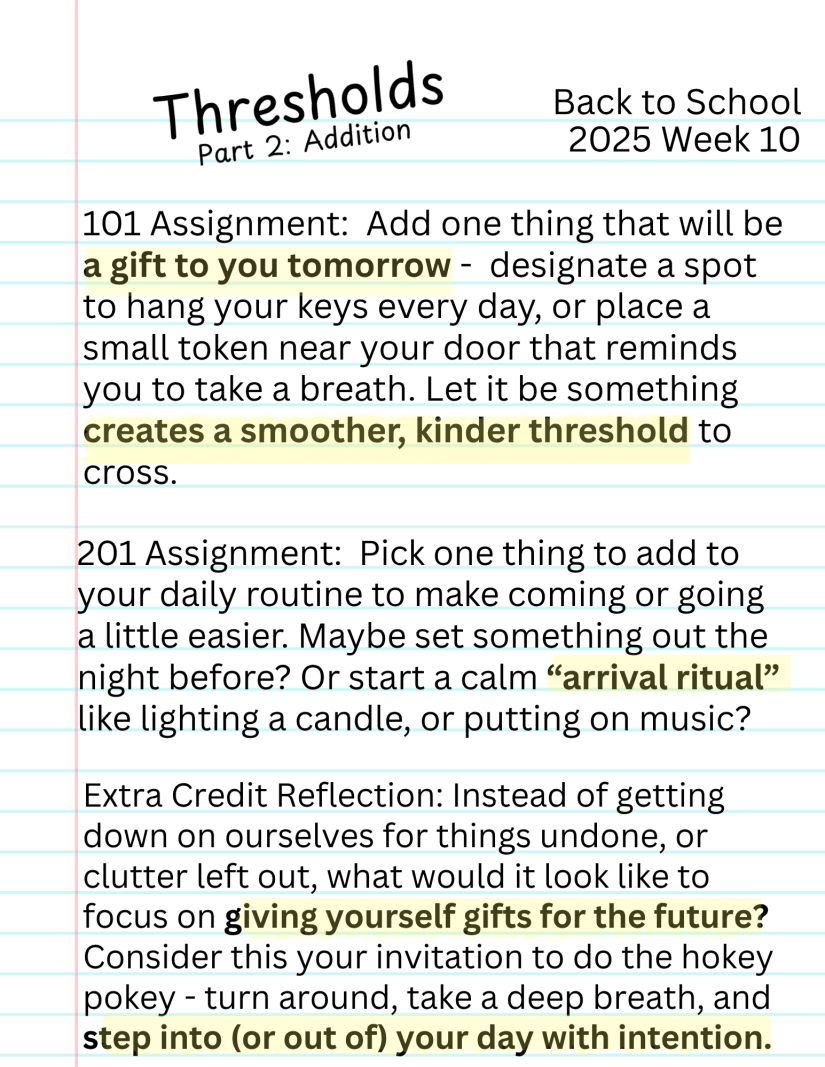
101: Add one thing that will be a gift to you tomorrow.

  • Designate a spot to hang your keys and practice hanging them there every day.
  • Place a small token, like a photo, or post-it note near your door that reminds you to take a breath and embrace peace, presence, courage, or patience.
  • Maybe it’s simply adjusting something small so your space works better for you. Can you add a basket just for mail, with a recycling bin right below it, so as you bring the mail in the door you can immediately trash the junk? Or add the habit of walking over to an existing garbage/recycling bin with your mail as you walk in the door?

Whatever it is, let it be something that makes leaving your home, and arriving back, feel like a smoother, kinder threshold to cross.

201: Pick one thing to add to your daily routine to make your going out and coming home a little easier. Can you set something out the night before? Or create a small ritual for arrival, like turning on a lamp, lighting a candle, or putting on music?

Reflection:

Instead of getting down on ourselves for things undone, or clutter left out, what would it look like to give yourself gifts for the future? Getting my lunch ready to go the night before is one less thing off the mental to do list playing on repeat in my brain when I try to go to sleep, and having it ready to go each morning means I’m not just feeling more prepared, I’m also more likely to eat a little healthier than grabbing a bar on the way out the door. Which helps create an upward spiral through my day.

Consider this your invitation to do the hokey pokey – turn around, take a deep breath, and step into (or out of) your day with intention.

This week's assignment pad

Week 9: Thresholds & Doorways (Part 1: Subtraction)

We are stepping into week 9 – literally!! This week we’re crossing thresholds and doorways, entering and exiting our homes.

If you’ve ever walked into a room and immediately forgotten why you went there, you’ve experienced what researchers call the doorway effect. Crossing a threshold sends a signal to our brains that we’re entering a new space, and it often causes us to “drop” what we were just thinking about.

In my day job, I often work with people who have memory deficits, and the doorway effect can be frustrating – compounding existing memory problems, but in our houses, the doorway effect can actually be a gift.

Every time we walk through the doorway to our home, we have a chance to reset. It’s a chance to decide what we leave behind and what we carry forward.

When you walk through your front door, what comes with you?
The mental list from work? The grocery store chaos? The stress of your commute?

An entryway cluttered with shoes, bags, mail, and everything piled in a tangle can continue the “traffic jam” feeling. We walk through the doorway and stay stuck in the outside mindset, instead of shifting into the calm of home.

What if your entryway became a true threshold?
A gentle cue to your brain and body: You’re here. You’re home. You can exhale now.

And just as importantly: what if your doorway also worked in the other direction?

What if, as you step out each morning, you carried with you something from home: a sense of peace, preparedness, or calm that travels with you through the day?

This week we’ll look at how we come in to our homes, and what we may need to subtract to find more space for calm as we enter our spaces. Next week we’ll consider how we can carry that peace with us as we leave.

Time for our homework assignments!: Choose what level(s) you’d like to try out and spend some time with it each day this week:


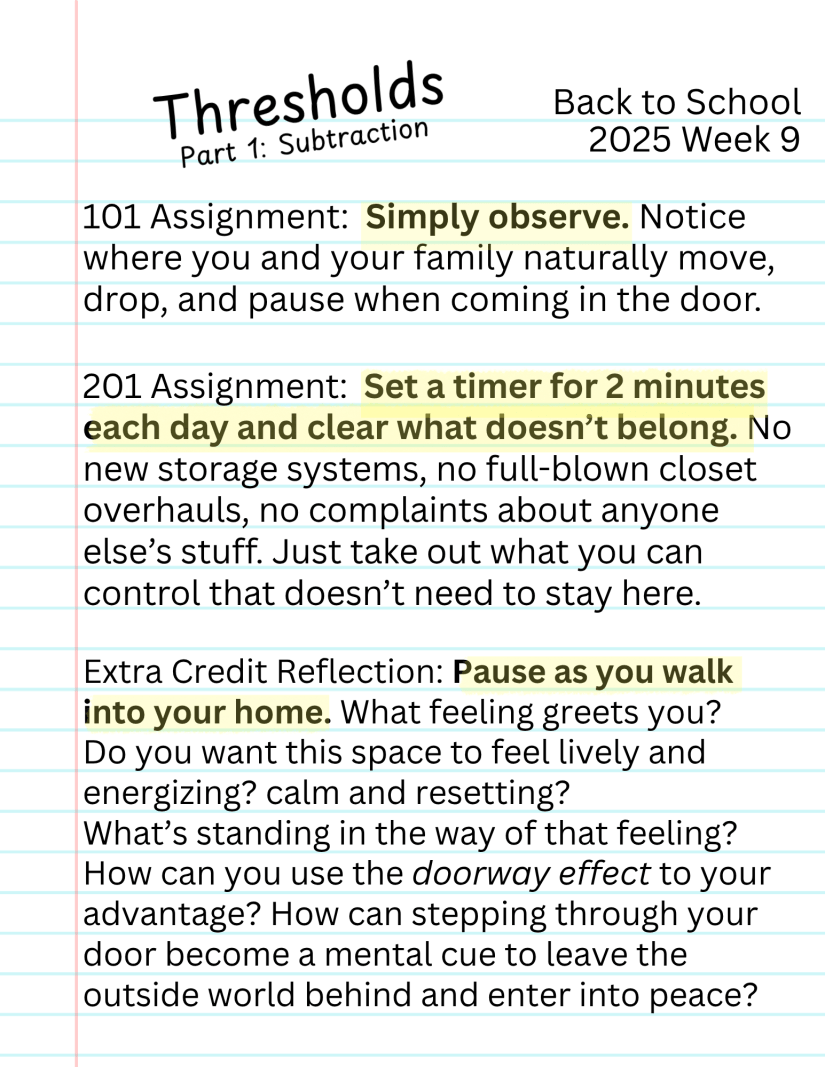
101: Simply Observe

Spend this week paying attention to how you (and others in your household) actually move through your entryway.

Ask yourself:

  • How do we transition into this space?
  • Is there a home for the things we consistently bring in? (think: shoes, bookbags, grocery bags, keys, sunglasses, etc)
  • What has a permanent, functional resting spot?
  • Are we using it consistently?

Our house is open concept. From the second you walk in the front door, you can see most of our main living space. We’ve created a few systems that do work for us:

  • A drawer to drop our keys, so we always know where they are.
  • A simple over-the-door hanging system I dubbed Lunchbox Lane, where our lunchbags go after they’re emptied.

And then there are the systems with good intentions but inconsistent follow-through, like the bin for mail that sometimes gets sorted, sometimes gets ignored, and sometimes just becomes a mountain of circulars and junk.

And finally, a few systems that might as well not exist. Like the shoe trays at the front door that, in theory, keep things tidy…but in reality look like someone dropped a box of shoes from the ceiling and walked away.

This week, notice where you and your family naturally move, drop, and pause when coming home.


102: Two-minute clutter rescue.

Set a timer for two minutes each day and clear what doesn’t belong.
No new storage systems, no full-blown coat closet overhaul, no complaints about anyone else’s stuff.

Just take out what you can control that doesn’t need to live in this space.
The goal is to work towards a small, daily exhale – a clear threshold to step into.


Reflection: What do you want to feel when you enter your home?

Pause for a moment as you walk through your door this week. What feeling greets you?
Do you want this space to feel lively and energizing? calm and resetting?

What’s standing in the way of that feeling?
And how can you use the doorway effect to your advantage? How can letting the act of stepping through your door become a mental cue to leave the outside world behind and enter into peace?

Let this week be about subtraction: noticing, removing, releasing.
Next week, we’ll explore the addition side of thresholds: how to add small cues and touches that help us transition with intention and bring more peace into and out of our homes.


This Week's assignment sheet

Take a Hint

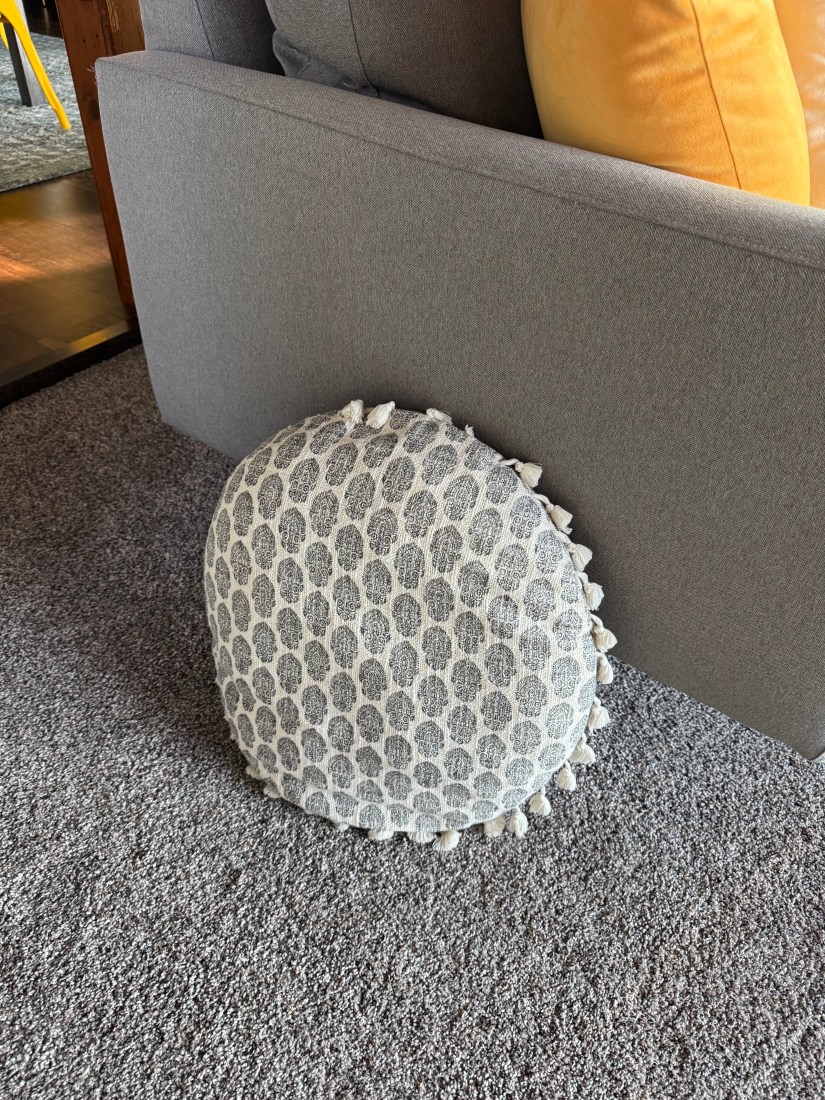
When we sit down on the couch, my partner and I both move a pillow.
Without thinking, at least one ends up on the floor every day. Then, when we get up, we have to remember to put it back.

What if instead of treating this like another micro task on our mental to do list,
I see it as a little hint:

Like the couch is quietly whispering: “You really don’t need four pillows.”
(Even if they are really cute.)

Maybe this doesn’t need a big evaluation or thought process.
Maybe the pillows that keep ending up on the floor are the ones we never choose. And maybe, instead of putting them back on the couch again, I could pick them up, put them in the donate bin, and never have to pick them up off the floor again.

What other simple clues are scattered around our homes, just waiting for us to notice?

The Joy in What Stays

Uncovering real isn’t a blog about decluttering. I mean, I do a lot of decluttering work here. But the point isn’t decluttering. The point is uncovering what’s real and living life well. 

Sometimes what I get rid of  allows me to live more simply – like the weekend I wrote about a couple weeks ago, where we were able to enjoy hosting a family gathering AND engage in relaxing activities before, because we chose to simplify our processes, our expectations, and the amount of stuff we had to manage.

And sometimes uncovering real is about celebrating what stays.

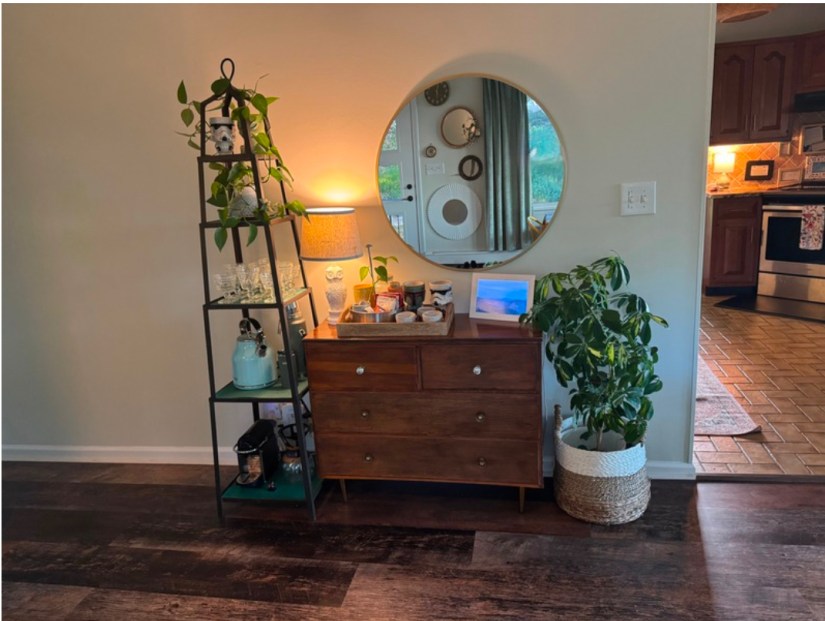
This little vignette is one of the first things we see when we walk in our front door.  

A little vignette made up of a vintage dresser, mirror, and etagere.

Sometimes it gets extra crowded with random sunglasses, receipts and other things that got put down instead of put away. But most of the time it’s contained, and I love all the little elements that make up this scene.

I have always tucked dressers anywhere I can find a place to fit them. This one was a $5 find at a garage sale I drove by many years ago. I cleaned it up and replaced a couple knobs and legs. (The new legs got a little damaged in our last move, but it seems to hold its weight fine so I’m not touching it)

The étagère was a roadside treasure that just needed a good cleaning before joining the vignette to add a little height and storage, and the planter bursting with pothos is half of an old lamp I pulled out of my sister’s garage when she was sorting through what the old owners had left behind, paired with a gold tray “saucer.” 

A small hot cocoa station for the kiddos is contained in a “silver tray” (aka: a repurposed filter basket I salvaged from a broken coffee urn. One of those giant ones churches always had at their Sunday morning coffee hours in my childhood. 

I love the mixes:

Modern and Vintage: the modern electronic photo album that occasionally features little videos from our wedding day and big round mirror (the only things purchased new for this space), with the thrift store score of the parfait glasses like the ones we ate pudding out of in my childhood. 

The highly functional (keys and office supplies storage tucked into the top drawers) with the goofy –  Star Wars themed cocoa mugs for each of our kiddos, a coffee drinking Lego figure, and a cracked owl lamp who is still sporting the mustache sticker my daughter decided he needed many years ago. 

Like many of my spaces, it still has lots of stuff. (Have I mentioned I’m not a minimalist yet today?) but keeping it maintained – dealing with the receipts that pile up in the key drawer,  culling our coffee supplies – means I get greeted with a display that makes me smile every time I come home. 

It’s functional AND pretty, layered with stories, memories and joyful pieces, and exactly what I want to come home to.

Plot Twist! Minimizing, Moving and Falling In Love

Happy Monday and welcome back to me!

I recently moved and it’s been a bit of a whirlwind deciding to sell, staging and selling my house, finding a place to live and all the crazy and changes that come with moving.

image from New City Moving

I recently had friends over for dinner in our new apartment and one of them looked around and asked, “Oh! Did you choose this place because it feels like a treehouse when you look out this window?”

I laughed.

I “picked” this apartment because it was the ONLY place with the main qualification I was looking for: keep my daughter in the same school.

(OK, so full disclosure: there was also a house for rent in town. for THOUSANDS a month above my budget. umm… no.)

This apartment was not exactly love at first sight.

The showing was rough – it was cramped, stained, cluttered, dark, and the current tenants were there when I went to look at it, so I couldn’t even view one of the bedrooms.

Speaking of bedrooms, it has half the bedrooms I previously had.

Half the square footage overall actually.

That part shouldn’t be a problem, though, I thought. I mean, I literally spent months chronicling my massive decluttering efforts here, even pretending to move at one point.

Why, I’m practically a minimalist! (she said, dripping with sarcastic self-awareness)

It turns out, pretending to move as an emotional exercise and actually.downsizing.fifty.percent.of.your.living/storage space are apparently two different beasts.

But I love a good challenge, and my COVID casualty jobs have not yet returned, so I decluttered and prepped like it was my job.

I gave items to people I thought would truly need/love/want them. I listed so many items on our local swap and sell sites that I had one woman who used to just stop by on her way home from work just to browse what I was putting up that day. I hosted a garage sale. (This time with planning and signs and everything!) I filled my driveway with items and posted “free” notices.

And after a couple weeks of purging,

     releasing,

          selling

               and gifting,

the moving van showed up.

The moving men began packing items and loading the truck, making small talk as they packed.

When one asked where I was moving, and heard it was a two bedroom apartment, they surveyed my inventory and kindly offered to let a few items get “lost” in the move or fall off the truck to help us fit. 😉

Not a great testament to my decluttering efforts. 

But I shudder to think of what the process would have been like if I hadn’t started the minimizing process this past March.

So here we are, sitting in our new-to-us home, surrounded by builder’s beige and feeling a little like I’m back where I was 20 years ago, moving into an apartment complex. Except this time I brought a couple kids, a lot more furniture and a slightly different design aesthetic (not that my proudly apple-stenciled kitchen, frog-stenciled bathroom and flower-stenciled bedroom weren’t the height of fashion in the late 90’s).

It’s been a couple weeks since the moving truck left (after it delivered ALL our remaining stuff)  and you know what?

I’m falling in love.

Everything is different and a chance to create a space that works for us. And I love creating. 

I don’t intend to live here for very long, and when it’s time to leave I want to: 

Not spend a lot of time and money returning this place to it’s original state.

-and-

Get my security deposit back.

-and-

I still want it to work for our family and feel like home in the meantime.

So I’m pulling out all the creative solutions I can borrow, copy and dream up to create a functional home we love in the time we’re here, uncovering what really matters and what’s really real along the way. 

Follow along for what’s worked, what hasn’t, tips and ideas, before and afters, and lots of messy middles, because that’s where I tend to live (in design, in life, whatever).

and check out updates on Facebook and Instagram here.

Sign up to get notifications of new posts here:

Week 6, Day 6: In Case of Emergency

This week, I scheduled a technician for some work at our house. 
As I thought through where they would need to go in order to get their job done, I mentally started a checklist: Make sure they can safely get to the fuse box. Can they easily reach the other systems they need to access to get the job done? Where else might they need to go?
A picture frame may need to be moved away from the fuse box, a rug may need to be rolled out of the way on the day they arrive, but in general, every access point I thought of was accessible.

No one would walk into my house and consider me a minimalist.

But if we had to have emergency services of any kind, I wouldn’t be distracted by needing to get a lot of things out of the way.

The daily work of decluttering and uncovering is not only benefiting how we live in our spaces each day, it’s also serving as preparation for emergencies and unforeseen circumstances.

There’s a welcome peace in knowing that. 

Week 6, Day 4: “How Could I Keep it”

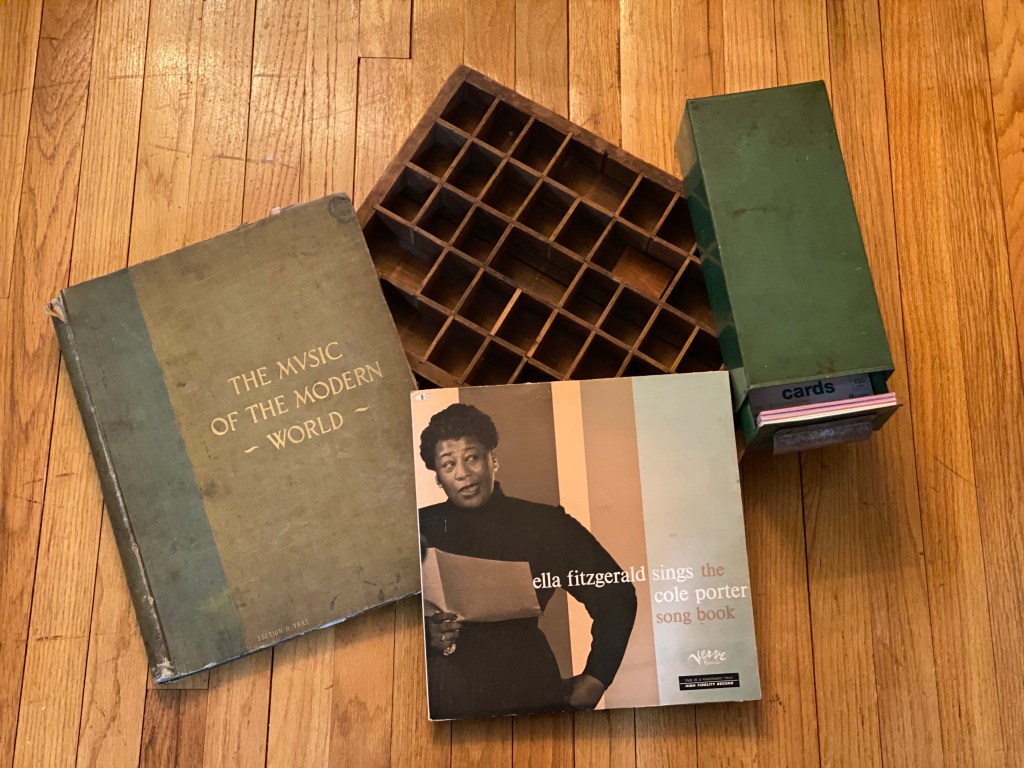
A few years ago, someone left me a message left me know a building full of antique stores near me was closing up and getting rid of all their remaining inventory, free for the taking. By the time I heard about it and drove over, people were carrying the last remnants out to dumpsters. I parked my van and began making trips from the basement of the building to my van and back, racing against the dumpster fillers.  There was no time to evaluate, so I beelined for the items I thought I could most use, mainly old scratched records, antique books and vintage boxes. I pulled away from the complex a little while later, covered in dust, my van bursting with treasure.


Later, when I experimented with selling repurposed creations, I used a number of the damaged treasures I had rescued for upcycled projects like wreaths, bowls, and plate stands. Most of the rest of the items have sat collecting dust in my basement since the day I brought them home.

As I went through some of those collections today, I found myself repeatedly saying, “oh, this so cool.” 

I realized what I meant was, “how could I get rid of something with so much potential to be used in a new way, or displayed in a great space, or appreciated for it’s rich history?”

But they were stuck on a shelf, in my unfinished basement.

So, what if “but they’re so cool” meant instead:

“how could I keep something with so much potential to be used in a new way, or displayed in a great space, or appreciated for it’s rich history?

The tiny change in words was a huge shift in my mind set. I’m not appreciating or using those items while they sit on my shelf, and I can give them to someone who might.

It was so freeing. 

90% of my unused vintage records, bins and other “treasures”? buh-bye.

Room to breathe, joyful spirit and clear shelves for my newly sorted kids memory boxes? hello!

Image Contents: a few of my favorite vintage treasures. An Ella Fitzgerald record and file card box which have homes in my living room, so they’re staying; a letterpress tray and vintage music encyclopedias which do not, so they’re heading off to their new homes.

Week 6, Day 3: Onions, Old Habits and Grace

Even though minimalism experts like Joshua Fields Millburn  and Joshua Becker talk about their  decluttering process taking about three-quarters of a year, and other experts describe decades-long journeys, I figured six weeks should be enough time to get my house to clutter-free-a-place-for-everything-and-everything-in-its-place status. I mean, I’m not a hoarder. I don’t have a storage unit. My basement is a disaster, but I can park in the garage. Usually.

When I started, I felt I landed pretty squarely in the “normal” range of clutter, on the scale I made up. In my head. Based basically on my house not looking like either an episode of Hoarders or a minimalist magazine cover. 

So today, six weeks into my decluttering journey, when I went to put a few things away and realized they didn’t have an easy permanent home, I was frustrated at myself. And when I gathered up a few things in a tote to “deal with tomorrow,” I felt guilty and ashamed. Hadn’t I just learned the lesson of “do it now” yesterday?

When am I going to reach the point of everything having a home and automatically putting it there?

Then I remembered two things. First, the “onion method.” Different people have different versions of what this means, but the concept always revolves around layers. Sometimes the layering is in a single decluttering session – like yesterday when Dana K. White’s method started with trash and the easy peasy stuff, then kept going through harder items.

Sometimes uncovering the layers happens over time.

A month ago,  I decluttered my reusable grocery bags. Today I went grocery shopping and realized, since I’m not stocking up on grocery items as heavily, I’m shopping for less, and therefore don’t need as many bags as I had narrowed it down to a few weeks ago.

I started with what I thought I needed, then was able to peel back more. 

The same thing is happening in the rest of my home. As I enjoy the benefits, see how I’m actually living, and build up my decision-making muscles, I’m often decluttering things as I come across them, and sometimes intentionally going back to spaces I know can function better with less. 

I also realized everything not yet having a place for everything and putting a few things in a tote for tomorrow is not failure. There’s grace in the process. After all, I have a whole other week before my self-imposed deadline. 😉

Image Contents: an image of Shrek saying, “Onions have layers, Ogres have layers. You get it? We both have layers!” Because I can’t talk about onions having layers with Shrek and Donkey busting into my head.

Week 6, Day 2: Experimenting With a Different Method

I’ve ingested quite a number of books, blogs, podcasts and youtube videos on decluttering and minimalism. (Oh the irony of my consumption of minimalism media.)

I’ve gleaned a number of things which work for me (timers are an essential part of my routines) and things which don’t (no, I don’t think the answer to a messy house is to just stick everything you have in baskets).

There is one decluttering method I’ve come across in a few places. I hate almost everything about it. Except: it works really well and solves a lot of the problems I create for myself, and apparently it’s just about perfect for me. But, you know, other than that…

Mostly I don’t like it because it goes against how I usually declutter. But how I usually declutter leaves me exhausted and often leaves my house in worse shape than when I started, so… I decided maybe it was worth trying… for research. 

The method is from Dana K. White of A Slob Comes Clean. She has multiple blog posts, youtube videos and books detailing what she’s learned over the past decade or so of her journey, I’m just going to highlight her method of “decluttering without making a bigger mess.”

Here’s what she says you need to get started:

1st: a donate-able donations bag/bin. (so you can just put the whole bag in the car and drop it off at a donation center.)

2nd: a garbage bag

3rd: your feet or someone helping you if you need assistance (yeah, it’s a little cheesy, but she’s going somewhere with it, so I’m including it) 

During your decluttering session you’re going to stick to a small, defined area and ask yourself two questions as you go:

  1. If I needed this item, where would I look for it? (take it there. now.)
  2. If I needed this item, would it ever occur to me that I already have one? (If not, get rid of it because I’d just buy a new one if I needed it.)

It’s her parenthesied directions that get to me:

Why would I take it there immediately? It breaks up the process! I’d get distracted! I can’t imagine how tired I’d be if I stopped with every item to put it somewhere else and came back! I’ll just make a pile as I go.

The second question is not as difficult for me, but I still feel the arguments rise up inside: What a waste of money! It’s a perfectly good item! Why would I buy a new one when I have one?!

But I tried it anyway.

Normally my decluttering process is more like:

dump everything out. sort every single item. get distracted. come back. look through the piles to remember what the sorting method was. get distracted. come back. finish sorting everything. feel accomplished but tired. look around and see scattered piles of donate, garbage, keep, bring to another room, etc. feel overwhelmed and frustrated with myself. 

Sometimes the piles would get addressed right then. Sometimes I’d need to move on to something else and the piles would linger, becoming magnets for more clutter and more frustration. 

So today, I picked one drawer and implemented the rules. She encourages you to start with the easiest stuff – usually trash. I didn’t have any obvious trash in the drawer, but found plenty of things which needed to be delivered to other places. I love her first question because it’s totally real, not aspirational and unattainable. You’re not designing a whole organizing system and creating places for something. You’re acknowledging how you actually operate. If she asked me where my favorite multi-bit screw driver belongs, I might be tempted to think about places on the workbench I should  keep it. When she asks where I would I look for it, my immediate answer is, “the kitchen drawer.” Ok, so don’t beat yourself up over whether that’s the right answer or not, go put it in the kitchen drawer! If there’s not room in the kitchen drawer, get rid of one thing in the kitchen drawer and now you have room. 

I still found it hard to deliver the items immediately. I was tired. I repeatedly found myself going to make a pile of something. But I forced myself to do it – looking around first to see if there was anything else I could take at the same time to save a trip. At one point the phone rang and I left to go answer it somewhere else. When I came back to the drawer, all that waited for me was an empty garbage bag, a partially filled donate bag and progress. Nothing totally dumped out. No piles. No mess. I could walk away right then and it would be better than I started.

This is the beauty of Dana’s method. You’re always at a stopping point and your stopping point is always better than when you started. 

So like I said, I hate almost everything about it. Except it works really well, solves a lot of the problems I create for myself, and apparently it’s just about perfect for me. 

Image Contents: What my spaces often look like AFTER I declutter – random piles of stuff that need to be delivered to other places, often tossed in bags that sit in the hall or basement until I set aside time to deal with the items inside. again.